Storefronts, curtain walls, and commercial glass — done right, on schedule, to code.
Commercial glazing is project work for businesses and buildings. Paneworks gives plain-English guidance and helps you get matched, free, with a licensed commercial glazing contractor for your project.
Project types
What kind of glazing project is it?
Tap the system you need for what's involved — and a free way to find a licensed commercial glazing contractor.
What to put in your glazing spec
Before you ask for bids, pin these down — it's how you compare apples to apples and avoid the expensive surprises.
- 1Glass type & safety glazing. Spell out tempered, laminated, or insulated (IGU) glass and thickness, and where code requires safety glazing — near doors, in railings, at low heights. The wrong glass spec is the most common and costliest mistake.
- 2Framing system & thermal break. Storefront, curtain wall, and window wall behave differently. Confirm the aluminum framing system, finish, and whether it's thermally broken — a low bid that skips the thermal break can fail energy code and sweat in winter.
- 3Performance ratings. For exterior glass, ask for U-factor, SHGC, and the low-E coating. These drive energy-code compliance and comfort. Get the actual numbers in the bid, not just 'energy-efficient.'
- 4Code, permits & warranty. Confirm permits, egress and ADA at entrances, wind-load or structural sign-off, the lead time on glass and framing, and the written warranty on both glass and installation before work starts.
Free matching
How Paneworks works
Four clear steps — and you stay in control the whole way.
The building or business, the glazing system you need, rough square footage or openings, and your timeline. Business contact and project details only — never financial records.
We connect you with licensed, insured, bonded commercial glass & glazing contractors who do this kind of work, at no cost to you.
Get the price, the glass spec, the framing system, the schedule, and the warranty in writing. The lowest number isn't the best value if it skips safety glass or permits.
You decide who to hire. Confirm the spec, code compliance, and warranty are right before you approve the work and pay the final amount.
Honest pricing
Honest commercial glazing cost ranges
Real numbers depend on the system, glass type, square footage, height, and your area. These are typical ranges, not bids.
Services
Commercial glazing work the contractors handle
The kinds of commercial glass and glazing projects the licensed contractors we match you with take on.
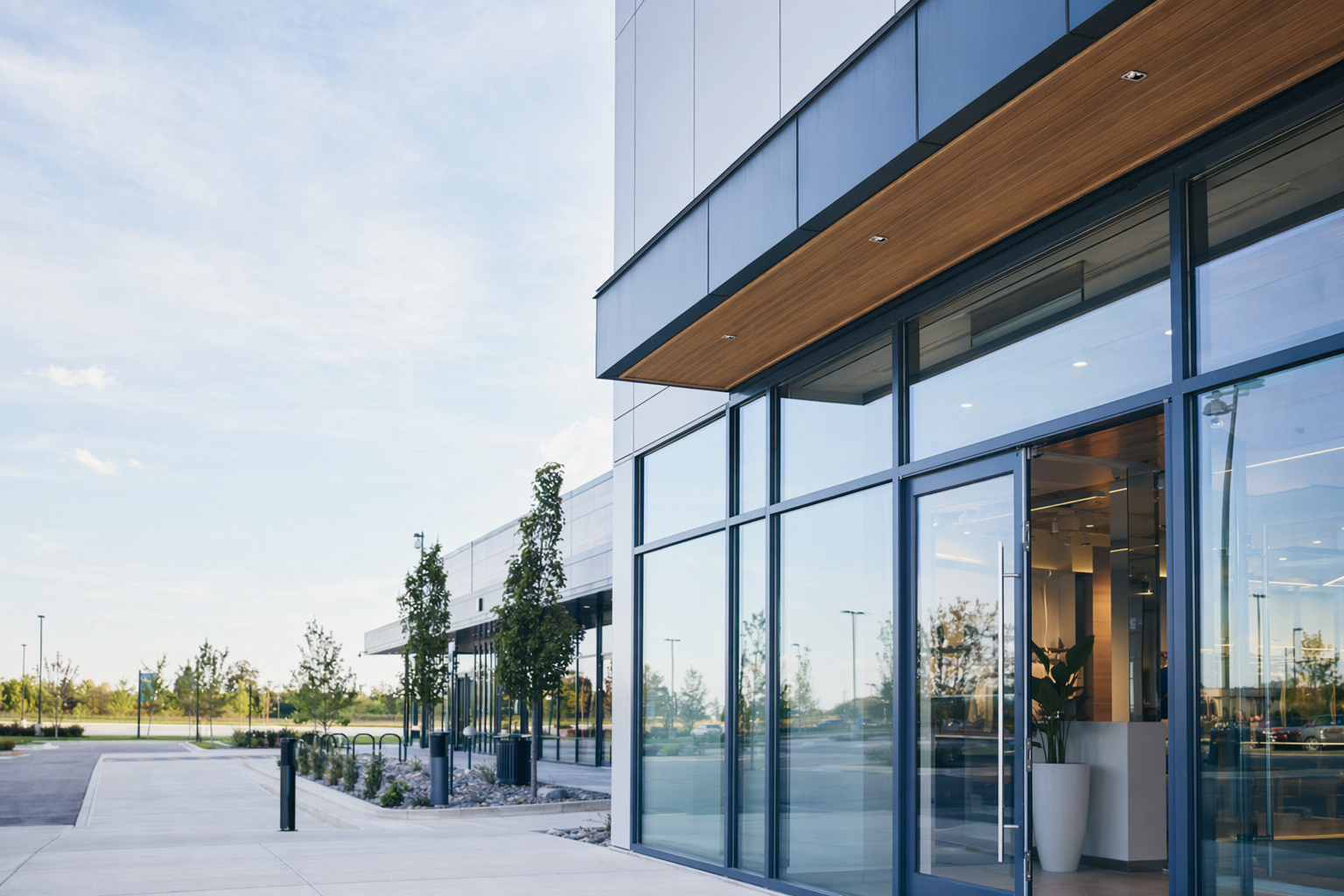
Aluminum storefront framing, display glass, and glass entrances for shops, offices, and tenant spaces. Learn what a storefront system involves and get matched free with a licensed glazing contractor.
Learn more → Curtain wall & window wall glazingFloor-to-floor glass facades, curtain walls, and window walls for commercial buildings. What the systems are, what drives cost, and how to get matched with a qualified glazing contractor.
Learn more → Glass railings, guardrails & partitionsStructural glass railings, guardrails, and frameless office partitions — safety glass, code, and hardware. See the work and get matched free with a commercial glazing contractor.
Learn more → Commercial windows & glass doorsCommercial window replacement, new openings, automatic and manual glass entry doors, and door closers. What to spec and how to get matched with a licensed glazing contractor.
Learn more → Glass facades & building entrancesArchitectural glass facades, spandrel glass, and main building entrances. Learn what these systems involve and get matched free with a qualified commercial glazing contractor.
Learn more → Retail & restaurant tenant glazingDisplay windows, tenant build-out glass, glass dividers, and storefront glazing for retail and restaurants. See the work and get matched free with a licensed glazing contractor.
Learn more →What commercial glazing systems include
Commercial glazing means the glass and framing systems used on business and multi-unit building projects. That includes storefront systems, curtain walls, window walls, glass railings, glass partitions, commercial windows and doors, glass facades, entrances, and retail or restaurant glazing.
A storefront is typically a ground-floor framed glass system used at entries and tenant fronts. A curtain wall is a larger exterior wall system that hangs from the building structure. A window wall is similar in appearance but is installed between floor slabs. These systems can look alike, but they are designed, priced, and installed differently.
Glass railings and interior glass partitions are also part of commercial glazing. So are entrance doors, sidelites, transoms, and replacement insulated glass units in commercial frames. If you want a plain overview of common project types, see services.
How Paneworks helps
Paneworks is not a glass, glazing, or construction company. We do not fabricate, install, repair, or give structural, code, electrical, or legal advice. We provide general educational information and help you find a licensed, insured commercial glazing contractor for the kind of project you are planning.
Our service is free to you. You tell us basic business contact and project details, and we match you with a contractor who handles commercial glazing work in your area. We only ask for business contact and project information such as your name, phone, ZIP code, what the project is, rough square footage or number of stories, and optional email or language preference.
You can see the process at how it works or start at get matched.
What to pin down in a glazing spec
A good glazing spec should be clear about the system, the glass, the frame, and the performance target. Start with the basic system type. Is it storefront, curtain wall, window wall, railing, partition, or an entrance package? Then define the location, size, elevations, and whether the work is new construction, a tenant improvement, or replacement.
Next, pin down the glass. Tempered glass is heat-treated to break into smaller pieces. Laminated glass has an interlayer that helps hold the glass together after breakage. Insulated glass, often called an IGU, uses two or more panes with a sealed airspace for better thermal performance. Safety glazing means glass that meets impact-related requirements where people could fall into it, walk into it, or be protected by it, depending on the location and code.
Frame details matter too. Aluminum framing may include a thermal break, which is a material barrier inside the frame that reduces heat transfer. Performance ratings should be stated plainly, such as air and water resistance, structural loading, U-factor, and SHGC. U-factor measures how much heat passes through the assembly. SHGC, or solar heat gain coefficient, measures how much solar heat comes through.
Also note who is responsible for engineering, field measurement, shop drawings, finishes, anchorage assumptions, permits, inspections, and warranty terms. Code and permit requirements vary by jurisdiction, so the project documents should be reviewed by the appropriate licensed professionals and local authorities.
How to compare bids without getting low-balled or over-specced
The easiest way to compare bids is to make sure each contractor is pricing the same scope. Ask for the exact system type, glass make-up, frame depth, finish, hardware, entrance package, attachment assumptions, sealants, and exclusions in writing. If one bid is much lower, it may be missing engineering, swing stages or lifts, demolition, permits, lead times, or field conditions.
A higher bid is not always over-specced, but it should be explained. Sometimes a stronger system, laminated safety glass, better thermal performance, or more complex access is appropriate. The key is whether the added scope is required by the design intent, building conditions, or local code, not just added because it sounds better.
Ask each bidder what is included, what is excluded, what assumptions they made, and what could trigger a change order. If you are still early in budgeting, typical ranges can help you sanity-check the numbers before you move forward. See costs for general commercial glazing cost ranges.
A practical starting point for your project
Before you request pricing, gather the basics: site address, photos, rough dimensions, number of stories, existing conditions, target schedule, and any drawings or landlord requirements you already have. Even a simple sketch and a few clear photos can help a contractor understand whether the project is a storefront replacement, a new entrance, a railing package, or a larger facade scope.
If you are a business owner, property manager, general contractor, or architect and want help getting started, Paneworks can help you find a licensed commercial glazing contractor for the project. Start with get matched when you are ready.
We explain commercial glazing in plain English and help you get matched, free, with a licensed contractor for storefront, facade, railing, partition, window, or entrance projects.
Got a glazing project? Get matched now
Free for buyers. Business contact and project details only. You compare bids and choose who to hire, and confirm the spec and price before any work starts.