Services
Commercial storefront systems & glass entrances
Paneworks helps you understand commercial storefront systems and glass entrances—and get matched free with a licensed, insured commercial glazing contractor. We don’t install or repair; we connect you to qualified pros.
What a commercial storefront system includes
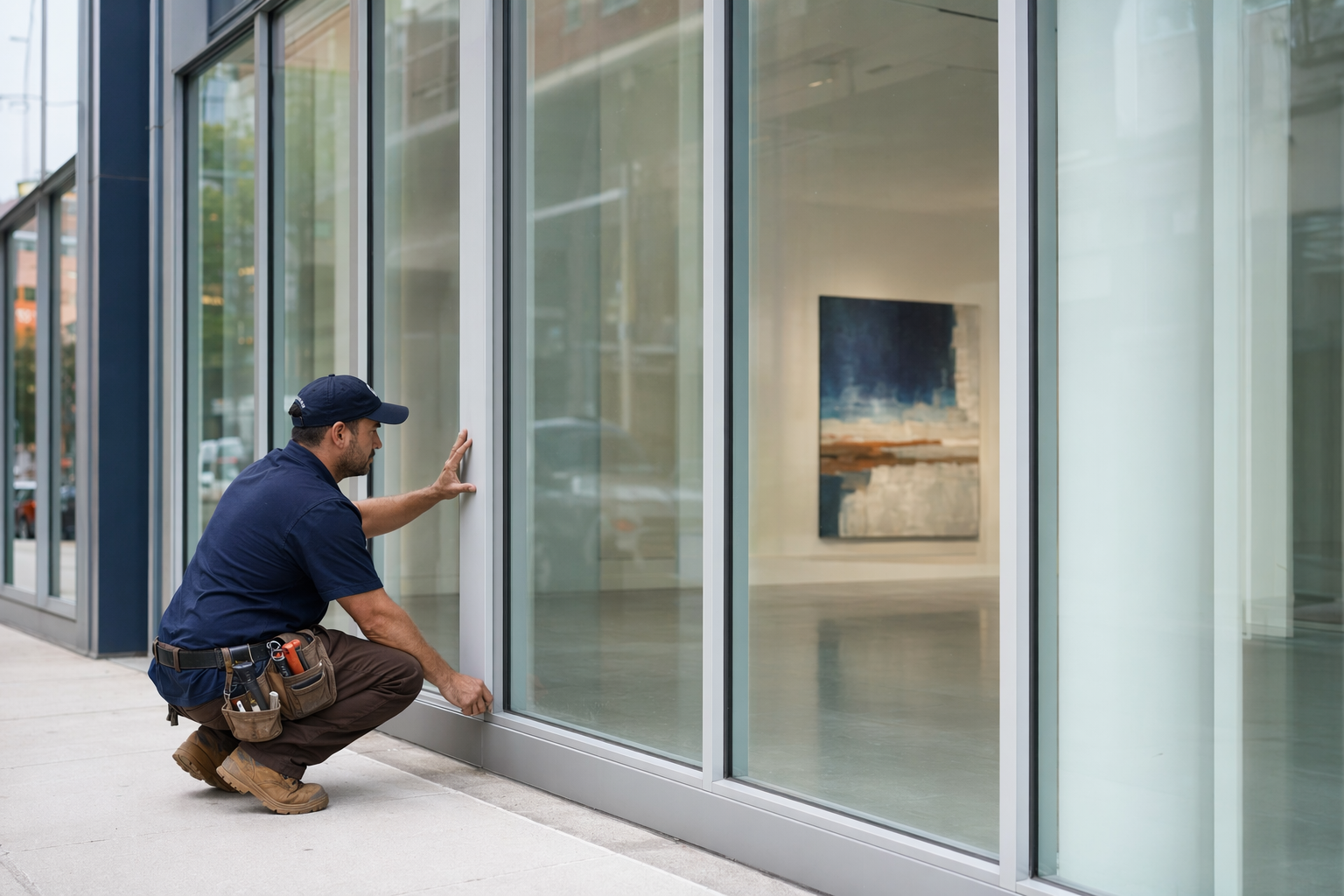
A commercial storefront system is the “front-of-house” glazing package for a business or tenant space—typically made of aluminum framing plus glass panels, doors, and hardware. It’s designed for daily use, visibility, energy performance, and weather protection.
Most storefront work is scoped, bid, and scheduled like other construction trades. That means you’ll usually coordinate dimensions, drawings, finish selections, lead times for glass and door components, and site conditions with your project team.
Typical storefront elements include display windows, sidelight panels, transoms, storefront doors, kick plates, and related aluminum trim. If your project involves an entry canopy or distinct entrance glazing, that may be bid as part of the storefront package or as a coordinated entrance scope.
To learn more about how glazing is commonly scoped and planned, see our services overview.

Storefront vs. curtain wall vs. window wall (plain English)
Storefront systems, curtain walls, and window walls all use glass and aluminum framing—but they’re built and detailed differently.
Storefront systems are usually lower-rise, storefront-scale assemblies meant for retail and tenant spaces. They often emphasize storefront aesthetics, merchandising visibility, and door operations.
Curtain walls and window walls are more “building-envelope” oriented and are typically used for larger exterior façades. Curtain wall systems often use specialized framing and panelized construction, while window walls may be configured with larger glass units and different installation methods.
If you’re not sure which system you have (or what you need), that’s a normal question for your project team. We help you get matched with a commercial glazing contractor who can review your scope and documents and clarify what’s in the bid.
Glass types that affect look, safety, and performance
Commercial glazing projects may include multiple glass types depending on safety, impact requirements, thermal performance, and design intent. Common options include tempered glass, laminated glass, and insulated glass units (IGUs).
Tempered glass is heat-strengthened for improved break resistance. Laminated glass uses a plastic interlayer to help hold together when broken, which can improve safety and reduce hazardous glass fragments.
Insulated glass units (IGUs) combine two or more panes with a sealed air or gas space. They can include low‑E coatings to reduce heat transfer. Your energy targets are often described using U-factor (heat loss) and SHGC (solar heat gain), which can vary by climate zone and building code.
Ask your designer or glazing contractor to explain what’s specified in the drawings (for example, “tempered,” “laminated,” “IGU with low‑E”) and why. If you’re building a new tenant space or upgrading an entry, the glass selection can also impact acoustics and glare.
Safety and compliance: why “just replacing glass” isn’t simple
Even when the work seems straightforward, commercial glass and glazing must be installed to match safety and code requirements. Building code, glazing safety standards, and occupancy rules may affect glass type, location, edge conditions, and how the unit is mounted.
Glass entrances also raise practical safety considerations. Doors may need the right glazing configuration for impact resistance, and hardware must be compatible with the door framing and operation requirements.
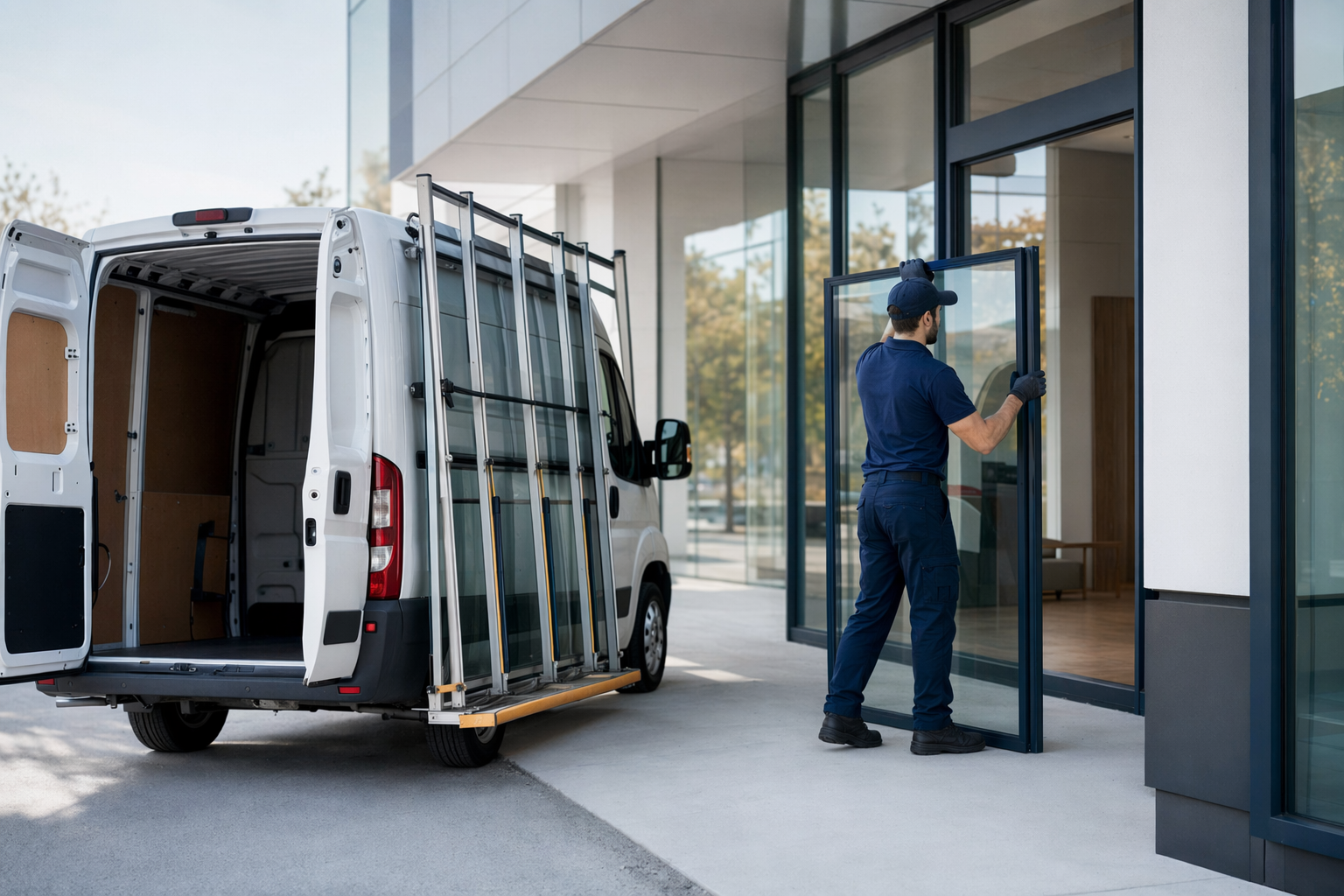
Because glazing work can involve heavy panels, overhead access, and strict tolerances, it should be performed by a licensed, insured commercial glazing contractor. A safe storefront depends on more than the glass—it depends on the full assembly and proper installation.
If you want a general cost overview, visit costs for typical budget factors. Jurisdiction, scope, and schedule still matter.
How Paneworks connects you with the right glazing contractor (free)
Tell us what you’re building or upgrading—such as a storefront system, glass entrance, retail door glazing, or tenant-window scope. We’ll collect business contact and project details (like ZIP, rough size or stories, and what the work involves) so we can match you appropriately.
Next, we connect you with a licensed commercial glazing contractor who can review your drawings and scope and provide bid options for the glazing work. We don’t promise a price, timeline, or outcome—because each project’s requirements and materials drive those details.
Glazing is often scheduled around other trades. The contractor may also confirm lead times for doors, glass fabrication, and hardware, and coordinate with your general contractor or building manager.
You can also review our get matched page for what to expect when you submit your project.
What to prepare before you request storefront glazing bids
To speed things up, gather the basics your team already has. If you have drawings or a storefront/entrance specification, those documents are the fastest way for a contractor to understand what’s required.
Helpful details include the storefront type (if known), the number of entrances, approximate glass area (square footage) or linear frontage, and whether you’re replacing existing storefronts or building new. Note any special finishes you want, such as framing color or door hardware style.
Also plan for coordination: you may need interfaces with existing walls, floor finishes, or adjacent façades. If the project is in an occupied space, discuss access hours and protection requirements with your contractor and property team.
For budgeting and what typically drives cost, see costs. Costs vary by city, permitting requirements, and the exact glass and framing scope.
Get a free match to a licensed commercial glazing contractor for storefront systems and glass entrances, and learn what glass, framing, and safety requirements typically involve.
Common questions
Is a storefront system the same thing as a curtain wall?
Not usually. Storefront systems are typically lower-rise, retail/tenant-scale assemblies with aluminum framing and glazing designed for entries and display. Curtain walls are larger façade systems with different detailing and installation methods. If you’re unsure, we can help you match with a contractor to review your scope.
What does “IGU” mean for commercial storefront glass?
IGU stands for insulated glass unit, usually two or more panes sealed together with a gap that can be filled with air or gas. IGUs can improve thermal performance, and low‑E coatings may be included depending on energy targets. Your drawings should specify the exact IGU performance requirements.
Do I need tempered or laminated glass for a glass entrance?
Often, yes—but the exact requirement depends on where the glass is located, occupancy, and code/jurisdiction rules. The safest approach is to follow the project specification and have a licensed commercial glazing contractor confirm what’s required for your entrance and glazing locations.
Can I get just glass replacement for a broken storefront panel?
Sometimes, but commercial storefront glazing must be handled as a scoped installation work item. The correct approach depends on the assembly, framing condition, safety requirements, and whether the existing system can be matched. A contractor may need to assess the full unit, not only the broken pane.
How much do storefront systems or glass entrances cost?
Typical costs vary widely by scope, glass type (tempered vs laminated vs IGU), door configuration, finish selections, and site conditions. A contractor bid will break out the glazing and related storefront components for your project. For general factors, see [costs](/costs/).