Services
Curtain wall & window wall glazing
Curtain walls and window walls are floor-to-floor glass systems used on commercial buildings to create a clean, modern exterior. We help you understand the basics and connect you with a licensed, insured commercial glazing contractor at no cost.
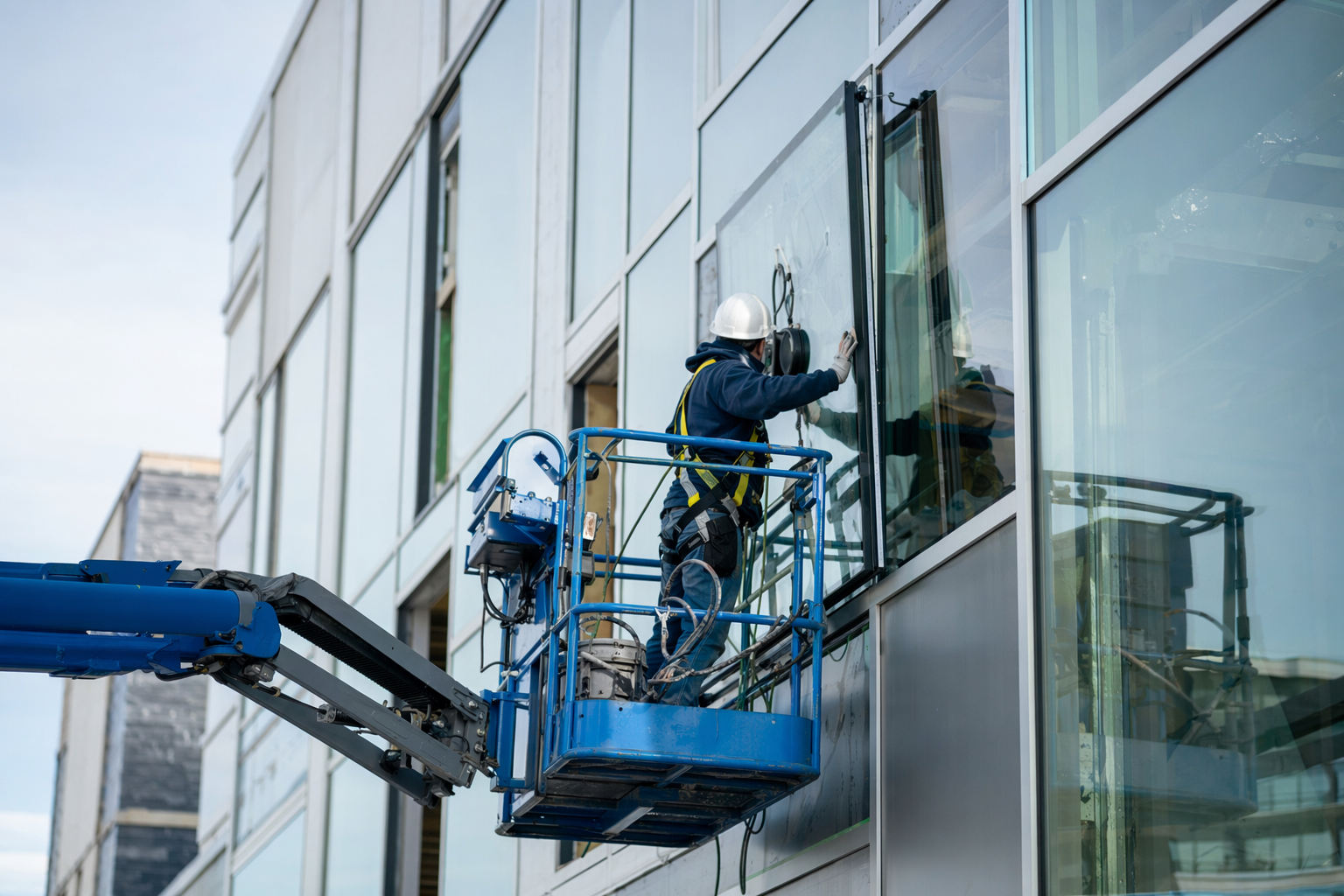
What curtain wall and window wall glazing means
Curtain wall and window wall are both exterior glass systems used on commercial projects, but they are not the same. A curtain wall hangs on the building structure and does not carry the building’s floor loads. A window wall sits between floor slabs and is tied into the structure at each floor line.
These systems are common on offices, mixed-use buildings, hotels, schools, and retail projects. They can use aluminum framing, insulated glass units, and thermal breaks to help with energy performance and comfort.
Because these are large, heavy, code-sensitive assemblies, the work belongs with licensed, insured commercial glazing contractors. Paneworks does not install anything. We help you find the right contractor for the scope.
- Curtain wall: continuous exterior glass system attached to the structure
- Window wall: spans between floor slabs, often used in mid-rise buildings
- Both require careful detailing, scheduling, and field coordination

Common project types and system choices
A project may call for a unitized curtain wall, a stick-built system, or a window wall assembly. The right choice depends on the building design, height, budget, schedule, and performance goals. On many projects, the architect and contractor also coordinate transitions to storefronts, entrances, spandrel panels, and opaque wall areas.
Glass selection matters too. Tempered glass is heat-treated to break into small pieces. Laminated glass has a plastic interlayer that helps hold the glass together after breakage. Insulated glass units, or IGUs, use two or more panes with a sealed air or gas space between them for thermal performance.
For energy efficiency, you may also hear terms like low-E coating, U-factor, and SHGC. In plain English: low-E helps control heat transfer, U-factor describes how well the assembly resists heat flow, and SHGC describes how much solar heat gets through.
- Tempered glass: stronger than standard glass and often used where safety is needed
- Laminated glass: helps keep glass in place after breakage and is often used for safety or security
- IGU: sealed glass unit that improves insulation and comfort
What affects cost on curtain wall and window wall work
Costs vary by jurisdiction, design complexity, access, structural conditions, and glass performance requirements. Height, quantity of corners, anchors, air and water performance targets, custom colors, and lead times can all affect pricing. Demo, masonry repairs, sealant work, swing stage access, and crane or lift needs can also change the scope.
As a general commercial reference, curtain wall is often priced higher than standard storefront work because it is more complex and more engineered. Window wall pricing can also vary widely depending on unit size, finish, and thermal performance. These are bid items, not fixed prices.
If you want a clearer starting point, see our general cost guide. We can also help you describe the scope in plain language so contractors can quote the same work.
- Project height and access can have a major impact
- Performance specs and custom fabrication often raise cost
- Repair, replacement, and new-build scopes are priced differently
How a commercial glazing project is usually scoped
A good scope starts with the basics: building address, project type, rough square footage, number of stories, and what needs to be built, replaced, or repaired. It also helps to note whether the project is new construction, a tenant improvement, a facade replacement, or a phased occupied-building job.
For bids, contractors usually need drawings, elevations, specifications, and any schedule or access limits. If the project is early-stage, a contractor can still often give budget-level feedback based on the information you have.
If you are not sure how to describe the work, our services page explains the types of commercial glazing projects we help with. Then you can get matched with a qualified contractor.
- Helpful details: ZIP, contact name, phone, project type, and rough size
- Drawings and specs improve bid accuracy
- Occupied buildings may need phasing and coordination
Why licensed, insured glazing contractors matter
Curtain wall and window wall installation is skilled work. The glass is heavy, the connections are precise, and the systems must meet building code, manufacturer requirements, and project specifications. Poor detailing or installation can lead to leaks, thermal issues, movement problems, or safety concerns.
That is why these projects should be handled by licensed, insured, bonded commercial glazing contractors with the right experience. Paneworks does not give structural, code, legal, or engineering advice. We simply help connect you with a contractor who can review the project and bid the work.
If your project is urgent because of broken glass, water intrusion, or a safety concern, you should seek prompt contractor help. We can still help you start the matching process.
- Code and manufacturer requirements vary by location and system
- Leaks and movement issues are common reasons projects need expert review
- Urgent issues should be handled promptly by a qualified contractor
How Paneworks helps
Paneworks is free for the person requesting help. We are not a glazing company and we do not fabricate, install, or repair curtain wall or window wall systems ourselves.
Instead, we help you get matched with a licensed commercial glazing contractor for storefronts, curtain walls, window walls, glass railings, partitions, commercial windows and doors, facades, and entrances. You share your project details, and we connect you with a contractor that can review the scope.
If you are ready to start, use our get matched form. It only asks for business contact and project details, like your name, phone number, ZIP code, and what kind of glass work you need.
- Free service for the reader
- Commercial projects only
- No obligation to move forward

Curtain wall and window wall are commercial glass facade systems, and we help you understand them and get matched with a qualified contractor for a free quote process.
Common questions
What is the difference between curtain wall and window wall?
Curtain wall hangs from the building structure and is not meant to carry floor loads. Window wall is installed between floor slabs and attaches at each level, which makes it a different system with different detailing needs.
Can you give me a price without drawings?
Sometimes you can get a rough budget range, but a real bid usually needs project details, photos, and often drawings or specifications. Costs vary a lot by height, access, glass type, and performance requirements.
Do you work on residential windows or auto glass?
No. Paneworks is for commercial and architectural glazing only, such as storefronts, curtain walls, window walls, entrances, and other building glass systems.
What information should I have ready before I get matched?
Have your name, phone number, ZIP code, project location, a short description of the work, and any rough square footage or number of stories. An email and language preference are optional if helpful.
How does Paneworks make money if the service is free?
Participating licensed glazing contractors pay a flat fee to be matched. That does not change your cost or our general information, and it is not a percentage of the job.