Services
Glass railings, guardrails & partitions
Glass railings, guardrails, and glass partitions can make a commercial space feel open, bright, and modern. We help businesses and building teams understand the options and get matched, free, with a licensed commercial glazing contractor.
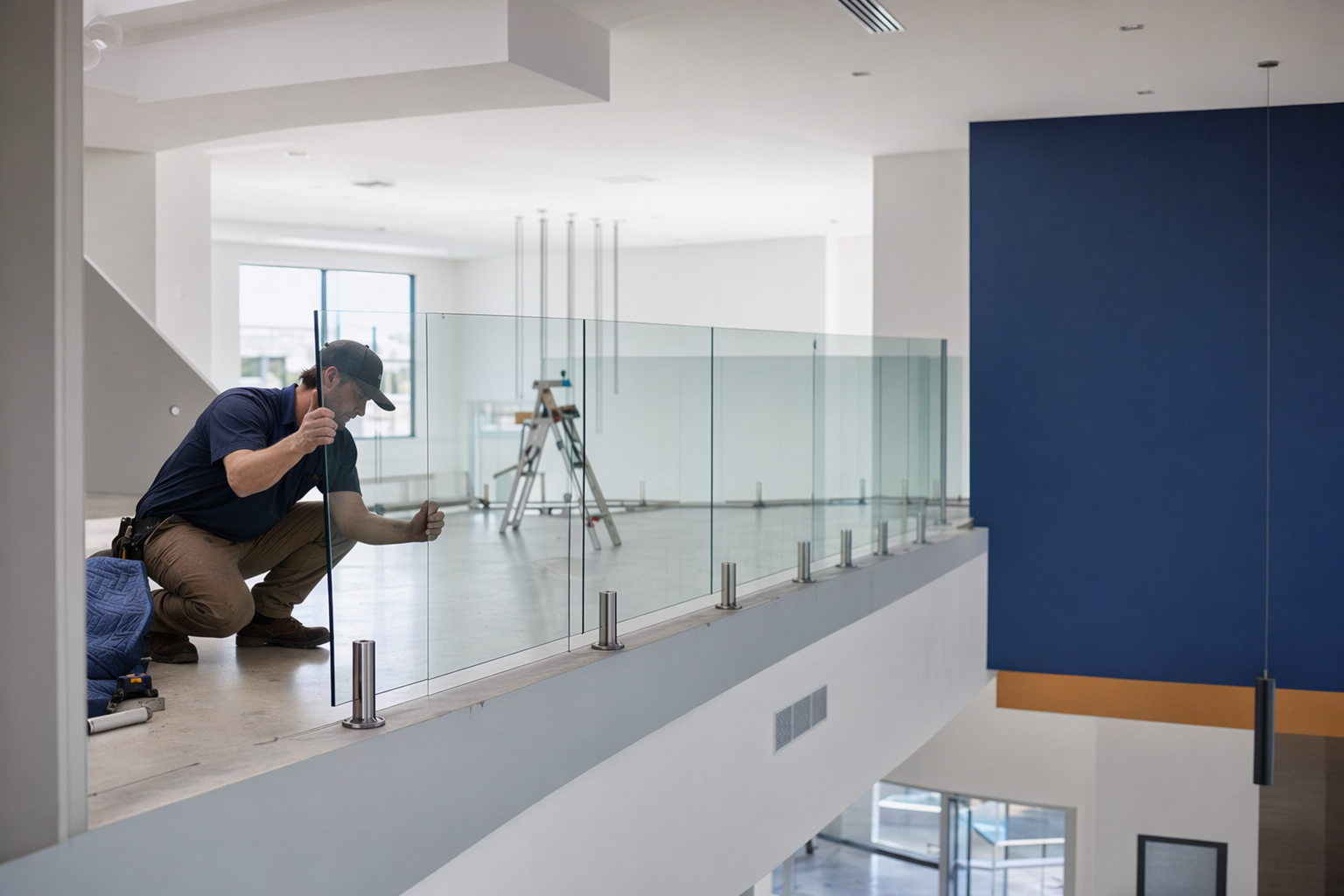
What these systems are used for
Commercial glass railings, guardrails, and partitions are common in offices, retail spaces, restaurants, hotels, mixed-use buildings, schools, and public-facing interiors. They are used where you want safety and separation without blocking light or views.
A glass railing or guardrail is a barrier at an edge, stair, landing, balcony, terrace, or mezzanine. A glass partition is a non-load-bearing glass wall used to divide interior space, such as conference rooms, lobbies, waiting areas, tenant suites, and storefront-adjacent interiors.
These are not simple decorative products. They are architectural glazing systems that must be properly scoped, detailed, fabricated, and installed. Hardware, anchorage, glass type, and code requirements all matter.
Paneworks is not a glazing company. We provide general educational information and help you find a licensed, insured commercial glazing contractor for your project.

Glass railing vs guardrail vs partition
People often use these terms interchangeably, but they do not always mean the same thing. In general, a guardrail protects people from a drop at an exposed edge. A railing can refer to a guard system or a handrail-related assembly, depending on the context. A partition divides space inside a building and usually is not there to protect from a fall.
A glass guardrail system may be framed, semi-frameless, or frameless. It can use base shoe channels, posts, clamps, or custom metal supports. Some systems also include a top rail. Whether a top rail is required can depend on the system design, glass makeup, use case, and local code review.
Glass partitions are usually interior systems. They may be full-height, partial-height, framed, or minimally framed. Some include glass doors, sidelites, transoms, privacy film, access control preparation, or acoustic upgrades.
If you are not sure what category your project falls into, that is normal. A commercial glazing contractor can review the plans, site conditions, and intended use and help clarify the scope before bidding.
Safety glass and common glass types
For railings, guardrails, and many partition applications, the glass is typically safety glass. In plain English, safety glass is glass designed to reduce injury risk if it breaks. The most common types are tempered glass and laminated glass.
Tempered glass is heat-treated to make it stronger than ordinary annealed glass. When it breaks, it usually shatters into many small pieces. Laminated glass is made by bonding layers of glass with an interlayer. If it breaks, the pieces tend to stay adhered to that interlayer instead of falling apart.
Some systems use tempered laminated glass, which combines both ideas. This is common where impact resistance, post-breakage behavior, and fall protection matter. The required glass makeup depends on span, loading, edge conditions, support details, and local code requirements.
For interior partitions, insulated glass is usually not needed because an insulated glass unit, or IGU, is mainly used in exterior building envelopes for thermal performance. Low-E coatings, U-factor, and SHGC are more relevant to exterior glazing than most interior partitions, but they can matter if the glass wall is part of an exterior-adjacent system. A licensed commercial glazing contractor can explain what is typical for your application.
Code, hardware, and why contractor selection matters
Glass guard and partition work is detail-sensitive. The glass may look simple, but the system depends on anchors, embeds, slab edge conditions, metal tolerances, handoff between trades, and code interpretation. That is one reason these projects are usually handled as bid-and-schedule commercial work, not as casual handyman work.
On guardrail projects, code questions can include required guard height, allowable openings, handrail coordination, structural loading, edge protection, and whether the selected system meets local requirements. On partitions, questions may include door hardware, egress, accessibility, privacy, and safety glazing locations. Paneworks does not provide code, structural, legal, or engineering advice, but we can connect you with a commercial glazing contractor who works in this space.
Heavy glass is dangerous to handle. Stairwells, elevated edges, and multi-story conditions may involve lifts, cranes, or specialized equipment. That is why licensed, insured, and often bonded glazing contractors are important. They understand staging, field measurement, fabrication lead times, and coordination with general contractors, architects, and building management.
If your project involves a damaged storefront-adjacent glass guard, a loose top rail, or a visibly unsafe condition, treat it as a real safety concern and limit access to the area while you arrange professional evaluation. We can match you with a commercial glazing contractor, but we do not perform repairs ourselves.
What affects cost and schedule
Pricing depends on system type, glass thickness and makeup, hardware finish, edge polish, custom fabrication, site access, and installation difficulty. A simple interior office partition is different from a custom frameless stair guard at a multi-story commercial property.
As a very general guide, commercial glass railing or guard systems are often priced by linear foot, while glass partitions may be priced by square foot or by opening and hardware package. Typical market ranges can vary widely by region and scope. For example, glass railing systems may land in the hundreds of dollars per linear foot, while interior glass partitions can range from moderate to premium pricing depending on acoustic needs, doors, and framing details. These are not bids.
Schedule also varies. Lead time may depend on field measurements, engineering review, permit timing, hardware availability, and whether custom glass fabrication is needed. A contractor usually needs clean dimensions, approved drawings, and site readiness before fabrication can be finalized.
For more on typical commercial glazing budgets, see costs. If you want to compare options for your project, we can connect you with a licensed commercial glazing contractor at no cost to you.
How Paneworks helps
Paneworks is a free matching service for commercial and architectural glass and glazing projects. We do not fabricate, install, repair, or supervise the work. We help you understand the scope and connect you with a licensed commercial glazing contractor.
When you reach out, we ask for business contact and project details such as your name, phone, ZIP code, what the project is, and rough size or number of stories. Optional details like email and preferred language can help with follow-up. We do not need financial account numbers, Social Security numbers, or immigration status.
This can help if you are a business owner planning a tenant improvement, a property manager replacing a damaged glass guard, a general contractor pricing a package, or an architect looking for a glazing trade partner. You can also review our broader services or start with get matched.
The service is free for you. Participating licensed glazing contractors pay a flat fee to be matched, and that does not change your project cost.
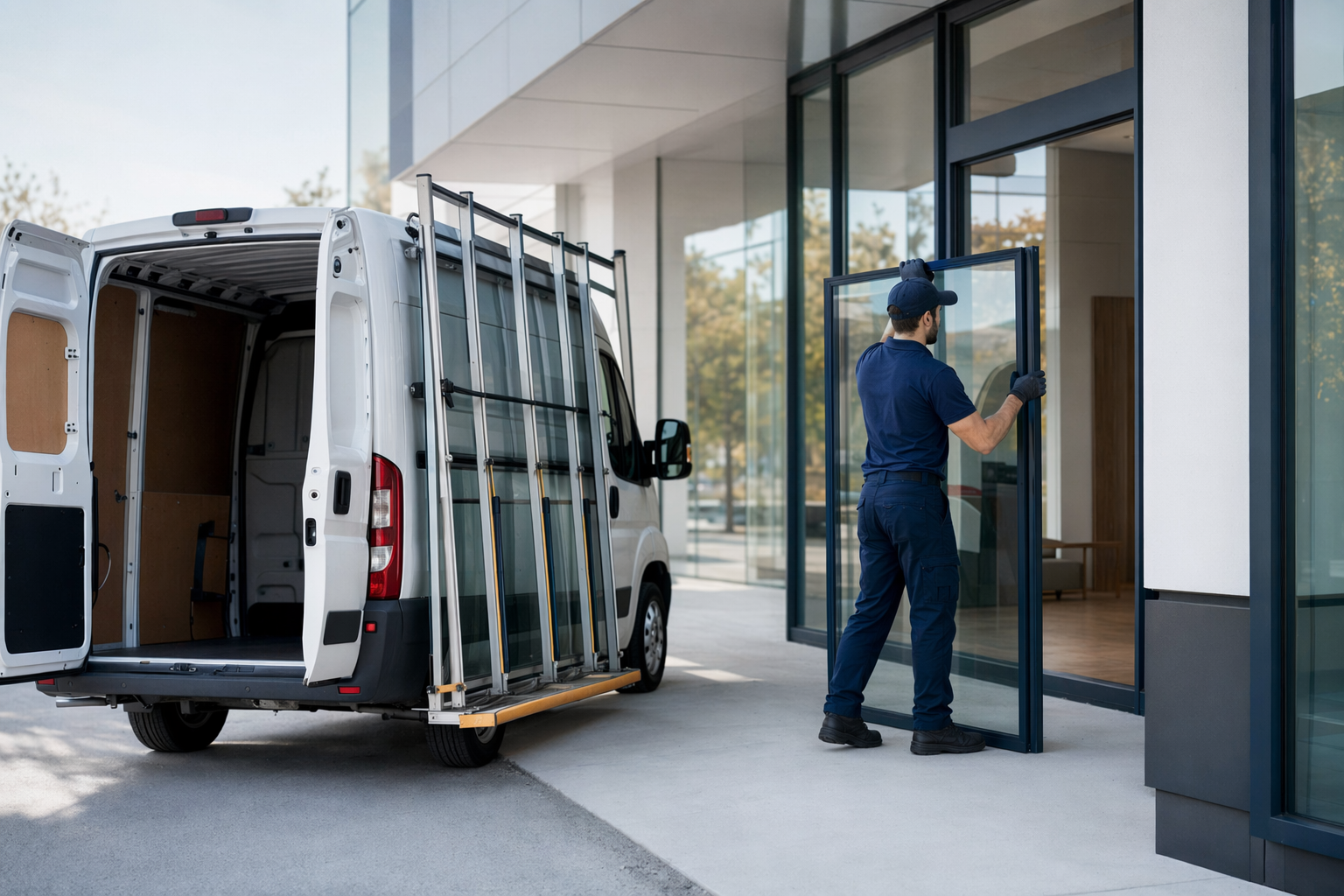
If you need commercial glass railings, guardrails, or office partitions, we help you understand the options and get matched free with a licensed commercial glazing contractor.
Common questions
What kind of contractor handles commercial glass railings and partitions?
Usually a licensed commercial glass and glazing contractor. These systems involve safety glass, specialized hardware, field measurements, and code-sensitive details, so they are typically not a general handyman item.
Is laminated glass better than tempered glass for a guardrail?
It depends on the system and project requirements. Tempered glass is stronger than ordinary glass, while laminated glass helps hold broken pieces together; many guard systems use tempered laminated glass because post-breakage behavior can matter.
Do frameless glass railings always need a top rail?
Not always. Some systems are designed with a top rail and some are not, but whether that works for your project depends on the tested system, the glass makeup, the support details, and local code review.
How much do commercial glass partitions or railings cost?
There is no single price. Cost depends on size, glass type, hardware, finishes, layout complexity, and site conditions, so the best approach is to get the scope reviewed and bid by a qualified commercial glazing contractor.
Can Paneworks give me a quote or tell me what code requires?
No. We are not a glazing company and we do not provide bids, engineering, structural, code, electrical, or legal advice. We offer general information and help you find a licensed commercial glazing contractor.