Services
Glass facades & building entrances
Architectural glass facades and main entrances are precision work—done safely, per building code, and built for durability. Paneworks is free to help you understand options and get matched with a licensed commercial glazing contractor.
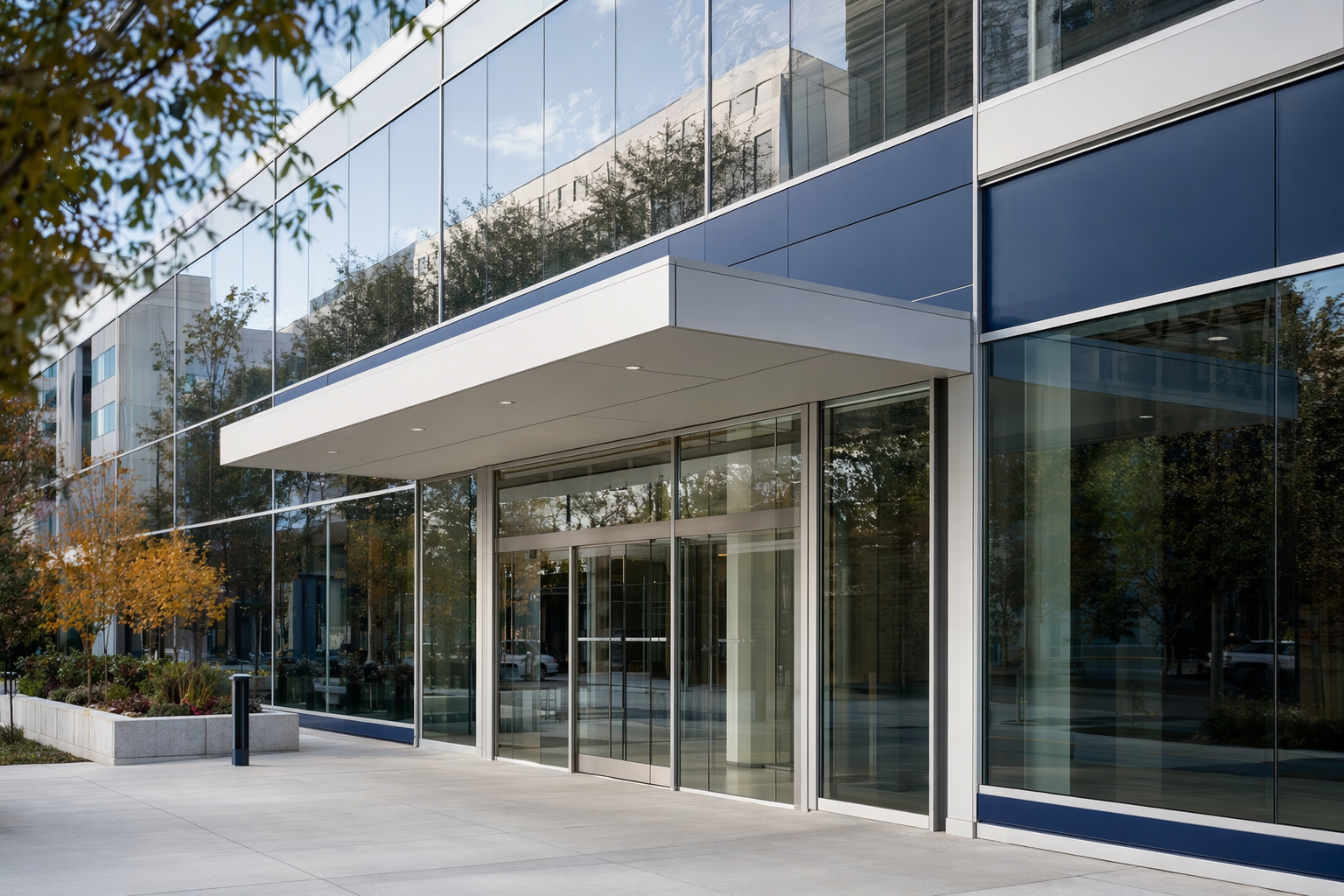
What we mean by “glass facade & building entrance” (commercial glazing)
A glass facade is the exterior wall system made of glazing and framing. It may include curtain wall panels, window wall sections, and special areas like spandrel glass (the panels between floors) and decorative glass.
A building entrance is often the most visible “front door” for a commercial property. It can include glass doors, sidelites, transoms, storefront-style framing, and sometimes automatic operators—each with its own scope and scheduling needs.
Because these are high-visibility, high-performance building elements, installers usually treat the work as a scoped, bid, and scheduled project—often coordinated with architects, structural engineers, and general contractors.

Common facade & entrance components (plain-language guide)
Curtain wall and window wall are two common exterior glass systems. Curtain wall is typically a self-supporting wall system attached to the building structure, while window wall often follows a more modular “window unit” approach. The right choice depends on the building design and performance requirements.
Spandrel glass is used in many facade systems to cover the area between floor slabs. It may be insulating, tinted, or designed to match the look of adjacent glass—while also contributing to the facade’s heat and light performance.
Entrances can include fixed glass and operable door systems. Door systems may use different glass types, framing, threshold details, and hardware. If the entrance uses automatic doors, coordination with the operator and building controls is part of the overall project planning.
Glass types and performance basics you’ll hear during scoping
Tempered glass is commonly used for safety in glazing applications. It breaks into small pieces, which helps reduce hazard compared with untempered glass. Laminated glass is glass with an interlayer that can help hold together if impacted.
Insulated glass units (IGUs) are common for facades. An IGU usually combines two (or more) glass lites with a sealed air space or gas between them, which helps improve thermal performance. You may also hear about low-E coatings—thin coatings that can reduce heat transfer and improve energy performance.
You might see performance targets described by U-factor (how well it insulates) and SHGC (solar heat gain). These terms help match the glass to your building’s climate and energy goals.
Framing, thermal breaks, and why “details” matter
Facade glazing is often installed into aluminum framing systems. Thermal breaks are insulating separations inside the metal framing to help reduce unwanted heat transfer. These details affect comfort, condensation risk, and long-term performance.
Sealants, gaskets, anchors, weatherproofing, and drainage paths are usually part of the contractor’s scope. For facades and entrances, waterproofing and air control are critical—small changes can affect how the building performs over time.
Because the building envelope is involved, projects are typically coordinated and documented carefully. That’s why contractors will want clear drawings, specs, and finish schedules before pricing and scheduling.
How to get your project ready for a bid (and a safer timeline)
To get accurate bids and avoid delays, gather what you already have: project drawings, facade/entrance elevations, door elevations and hardware notes, existing conditions photos (especially at problem areas), and any performance targets or spec language.
If this is a replacement, note what is being replaced and why—damage, water intrusion concerns, facade updates, code-related requirements, or energy upgrades. Even a short description helps the contractor understand the likely scope.
Glass work can be urgent when there’s safety risk (like damaged entrance glass or concerns with railings near entrances). Still, a licensed, insured contractor should handle it using the proper methods for heavy glass, site safety, and building compliance.
Get matched free with a qualified commercial glazing contractor
Paneworks helps you find and connect with a licensed commercial glazing contractor for facade and entrance projects. We’re not a glazing company and we don’t install or repair glass—we help you understand options and get matched at no cost.
Start by sharing basic business contact and project details on our get-matched page. Include the building ZIP, roughly how many stories or approximate square footage, what part of the facade/entrance you’re working on, and your preferred contact method.
If you want context on typical budget factors, explore costs and learn what drives pricing for commercial storefront, curtain wall/window wall, IGUs, and entrances. For a broader overview of what’s in-scope, see services.

Tell us about your commercial glass facade or main entrance project, and we’ll help you get matched for a licensed, insured commercial glazing bid—at no cost—so you can make informed, code-aware decisions.
Common questions
Is a glass facade considered commercial glazing only, or can home-window companies do it?
Glass facades and building entrances for commercial properties are skilled, code-sensitive projects. They often involve heavy glazing, specialized frames, waterproofing details, and coordination with the building structure—so they should be handled by licensed, insured commercial glazing contractors, not typical consumer home-window installers.
What’s the difference between tempered and laminated glass for a building entrance?
Tempered glass is engineered for safety and breaks into smaller pieces. Laminated glass uses an interlayer to help hold the layers together if impacted. The right choice depends on the project’s safety, performance, and design requirements.
What is spandrel glass and why do facades use it?
Spandrel glass is typically the panel area between floors that can provide a finished look while also contributing to facade performance. It can be insulated or designed to match adjacent glass, depending on the system and building requirements.
Why do bids for curtain wall or window wall take detailed drawings and specs?
Facade systems are made of many coordinated parts—glass, framing, sealants, anchors, and performance targets. Accurate bids depend on project-specific drawings, tolerances, system types, and sometimes energy targets, because these details affect scope and scheduling.
If glass is broken at the entrance, how urgent is it?
A broken entrance window or door glass can be urgent for safety and security reasons. Still, the right next step is to contact a licensed, insured commercial glazing contractor so the area is handled safely and the replacement is done per applicable requirements.