Services
Retail & restaurant tenant glazing
Planning a retail or restaurant space often means new glass: display windows, entrances, partitions, and tenant build-out systems. We help you understand the scope and get matched, free, with a licensed commercial glazing contractor.
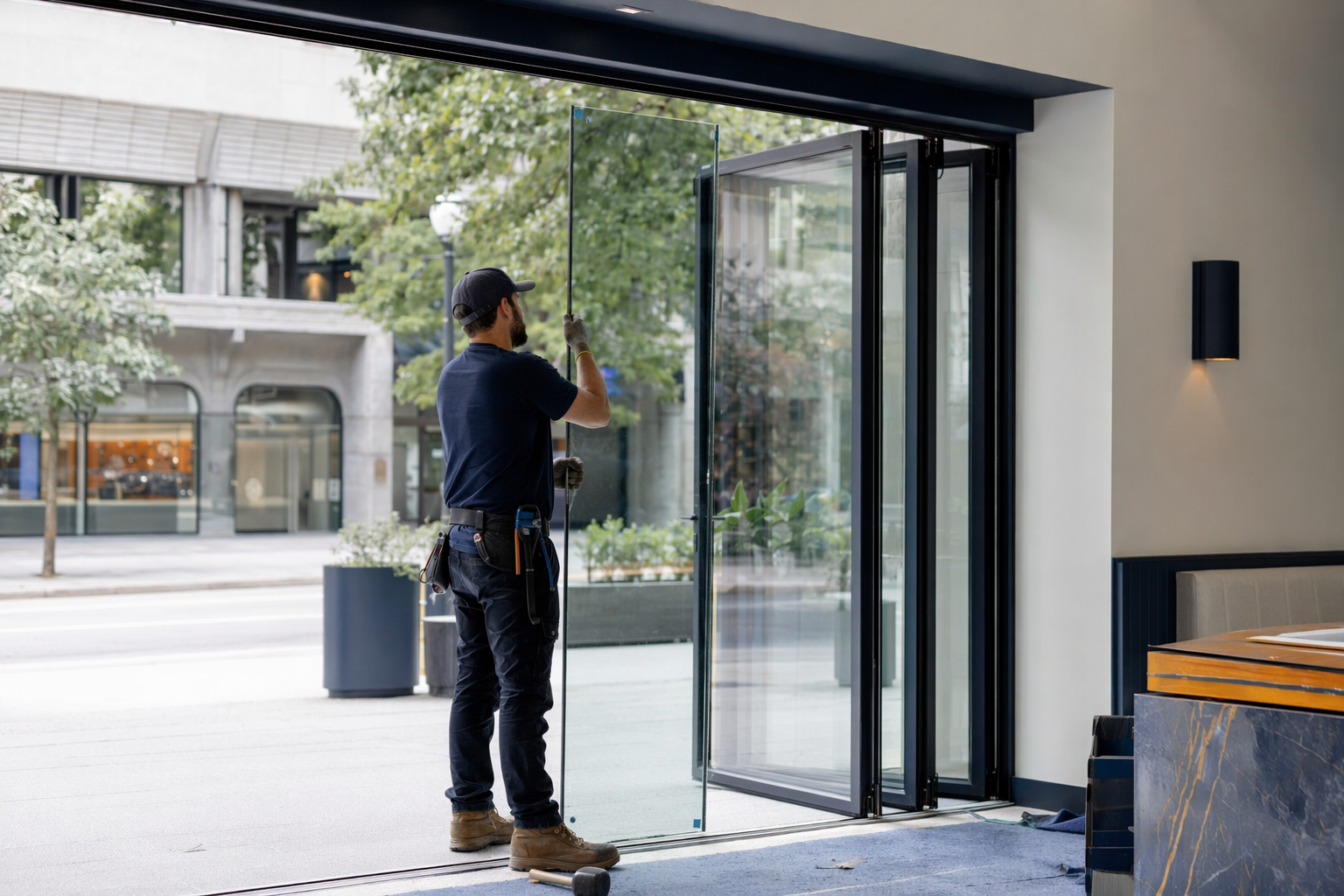
What retail and restaurant tenant glazing usually includes
Retail and restaurant glazing is commercial, project-based glass work inside a leased space or at the storefront. It can include display windows, glass entrances, interior glass partitions, transaction windows, sidelites, aluminum-framed systems, and replacement glass for a tenant improvement or remodel.
Some projects are part of a first-generation build-out in a new shell space. Others happen when a new tenant takes over an existing unit and needs a different layout, new branding at the entry, or upgraded glass for visibility, security, or energy performance.
This is not home window repair or auto glass. Commercial glazing work is usually scoped from plans, field measurements, and site conditions, then priced and scheduled as a trade package. We do not perform the work ourselves. We help you find a licensed commercial glazing contractor for the project.

Common systems in retail and restaurant spaces
The most common exterior system is a storefront. In plain English, storefront is the aluminum-framed glass system at the front of a ground-floor business. It often includes fixed glass, entry doors, sidelites, and transoms. Storefront is widely used for shops, cafés, restaurants, salons, and service businesses.
Some larger projects may involve curtain wall or window wall systems. Curtain wall is a more engineered exterior facade system that hangs off the building structure, often used on bigger commercial buildings. Window wall is installed between floor slabs, usually in multi-story construction. Many tenant spaces only need storefront work, but the building's existing facade may affect how new glazing ties in.
Inside the space, glazing may include glass partitions, private dining enclosures, office fronts, service windows, bar dividers, and glass railings. Safety requirements matter here. Areas near walking paths, doors, low glass, and railings often require safety glass under local code.
If you are not sure what system your plans call for, that is normal. A licensed glazing contractor can review the drawings, site conditions, and intended use. If you need help getting started, we can match you with a contractor who handles commercial tenant glazing.
Glass types explained in plain language
Tempered glass is heat-treated to be stronger than ordinary glass. When it breaks, it tends to crumble into many small pieces instead of large sharp shards. That is why it is commonly used in doors, sidelites, partitions, and other locations where safety glazing is required.
Laminated glass is made by bonding layers of glass with an interlayer. If it breaks, the glass can stay attached to that inner layer. This can help with safety, sound control, and in some cases security or forced-entry resistance, depending on the exact make-up of the glass.
Insulated glass, often called an IGU, is a sealed unit with two or more panes and a space between them. It is used when thermal performance matters, such as at exterior storefront windows. Low-E coating is a thin coating that helps control heat transfer. U-factor measures how much heat passes through the assembly; lower is generally better for insulation. SHGC, or solar heat gain coefficient, measures how much solar heat comes through; lower can help reduce cooling load in sunny conditions.
Framing matters too. Aluminum storefront framing is common because it is durable and clean-looking. Some systems include thermal breaks, which are built-in barriers that reduce heat moving through the frame. The right glass and frame combination depends on climate, orientation, lease requirements, local code, and the design intent.
What affects scope, bids, and scheduling
Commercial glazing prices are based on the actual scope, not a simple online quote. The size of the openings, type of glass, frame finish, door hardware, safety requirements, lead times, access to the site, and whether work happens in an occupied shopping center or restaurant all affect the bid.
For rough planning only, a basic aluminum storefront system may fall in a typical range of about $100 to $200+ per square foot installed, while more complex systems, custom entrances, specialty glass, or larger facade work can go higher. Interior glass partitions and glass railings are also usually priced from the actual layout, details, and hardware. These are not bids, and costs vary by market and project conditions. You can read more on our general commercial glazing cost guide.
Scheduling also depends on more than labor. Shop drawings, approvals, field measurements, fabrication, glass tempering or lamination, hardware coordination, and delivery timing can all affect the calendar. Restaurant work may need after-hours coordination. Retail centers may have landlord rules, insurance requirements, and delivery windows that affect installation planning.
If the project involves cracked entry glass, a damaged storefront, or a glass railing that may be unsafe, that can be more urgent. Heavy glass, lifts, and code compliance make this skilled work. A licensed, insured glazing contractor should evaluate the condition and advise on the next steps.
Why tenant build-out glazing needs a commercial specialist
Tenant spaces may look simple from the sidewalk, but the glass package can involve storefront framing, door clearances, panic hardware coordination, ADA-related details, safety glazing locations, anchorage conditions, weather exposure, and landlord design standards. Restaurants can add more complexity because layouts often include patios, service windows, partitions, and high-traffic entrances.
This is why commercial glazing work belongs to licensed, insured, and properly qualified contractors. The panels are heavy. Work may happen overhead or near the public. Building code and approved plans matter. A professional contractor can coordinate with the architect, general contractor, property manager, or tenant representative.
Paneworks is a free matching service. We are not a glazing company, and we do not give structural, code, electrical, or legal advice. We help businesses, owners, managers, architects, and contractors understand the project and connect with licensed commercial glazing contractors who serve the area.
How our free matching service works
Tell us the basics: your business contact information, the project ZIP code, what kind of retail or restaurant glass work you need, and any rough details like square footage, number of stories, timing, or whether plans are available. You can also share an optional email address and language preference.
We use that information to help match you with a licensed commercial glazing contractor for the type of project you described. That may be a storefront-focused contractor, a team experienced in tenant improvements, or a contractor used to coordinating with property managers and general contractors on occupied commercial sites.
There is no cost to you to use Paneworks. If you want to start, visit our matching page. If you want a broader overview of project types first, see our commercial glazing services guide.
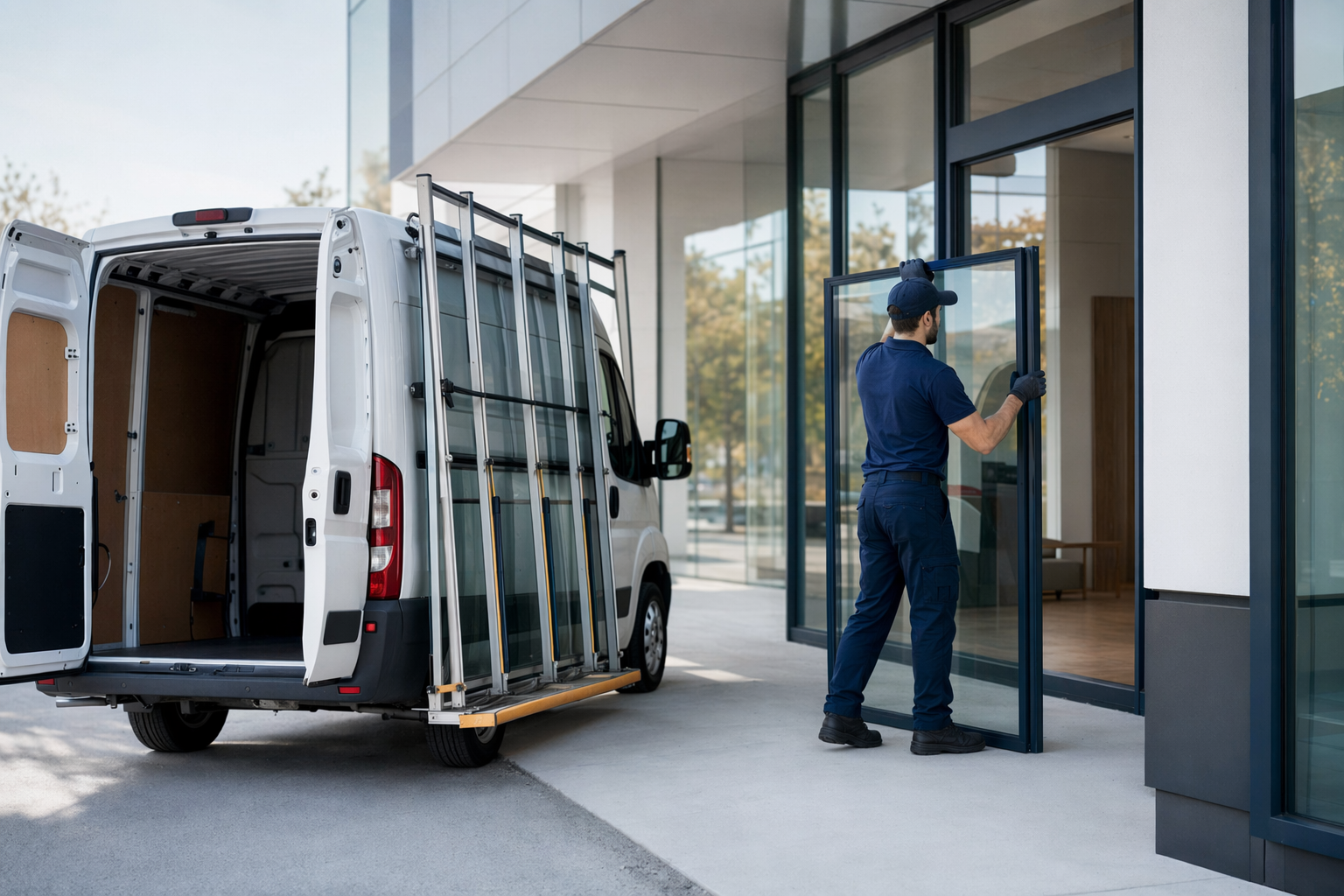
If your retail or restaurant space needs commercial glass work, we help you understand the scope and get matched for free with a licensed glazing contractor.
Common questions
Can you help with a new restaurant or retail tenant build-out?
Yes. We help you find a licensed commercial glazing contractor for build-outs, remodels, storefront upgrades, interior glass partitions, and related tenant glazing scope.
Do you do the glass installation yourselves?
No. Paneworks is not a glazing or construction company. We provide general educational information and help connect you with a licensed commercial glazing contractor.
What is the difference between storefront and curtain wall?
Storefront is the ground-floor aluminum-and-glass entry or facade system commonly used for shops and restaurants. Curtain wall is a more engineered exterior facade system typically used on larger buildings and different structural conditions.
What information should I have before asking for a bid?
Helpful details include the project address or ZIP, photos, approximate opening sizes, whether plans exist, the type of business, target timeline, and whether the space is occupied. Exact bids usually require field measurements and review of plans or site conditions.
Is your service really free?
Yes. Our service is free for the reader. Participating licensed glazing contractors pay a flat fee to be matched, which does not change your project cost.