Services
Commercial windows & glass doors
Commercial windows and glass doors need the right spec, the right hardware, and a licensed pro to install them safely. We help you find a commercial glazing contractor for replacement, new openings, entry doors, and related project work at no cost to you.
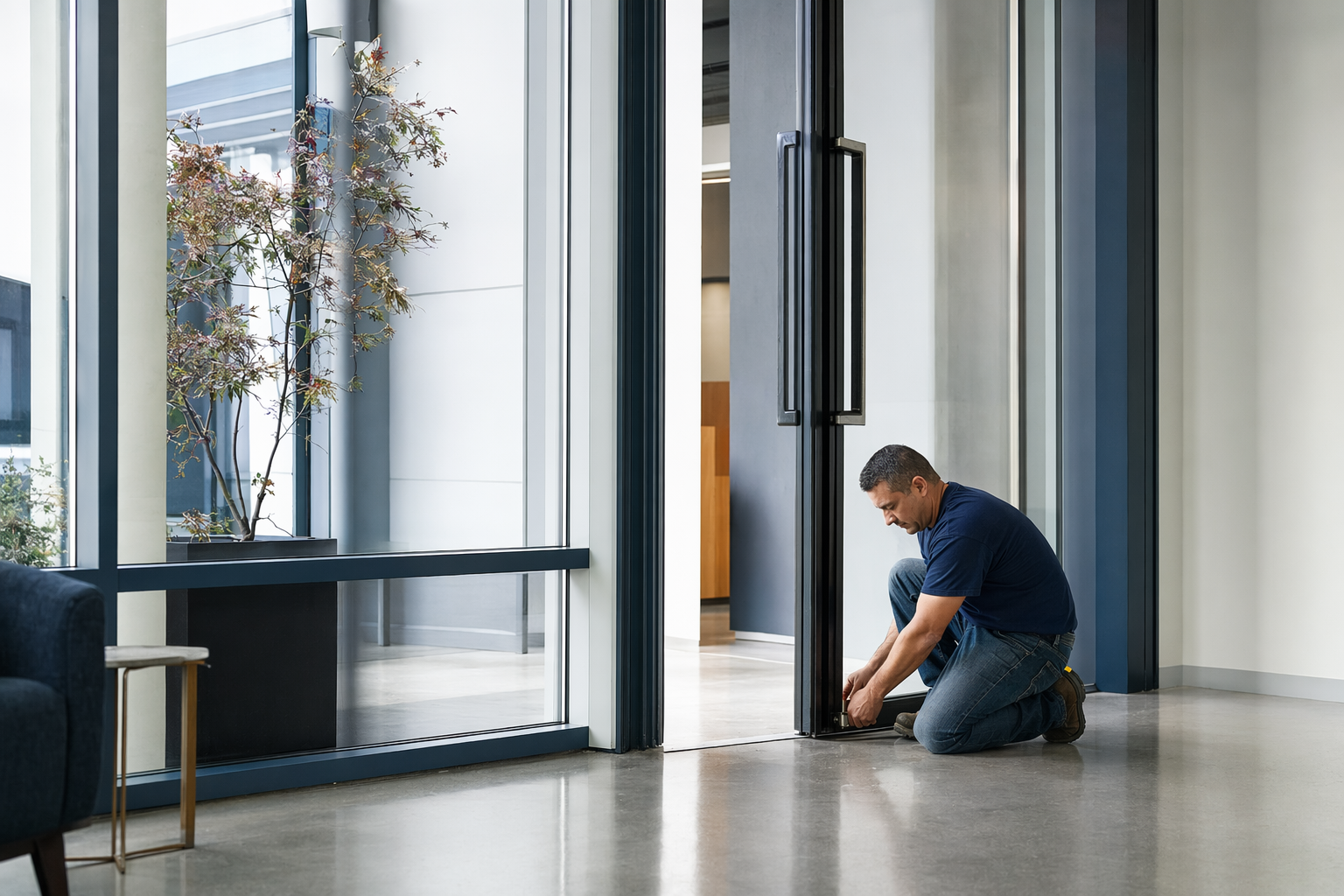
What commercial windows and glass doors include
This page is for commercial and architectural projects, not home windows or auto glass. Typical work includes storefront windows, aluminum-framed commercial windows, glass entry doors, sidelites, transoms, and door hardware such as closers, pivots, and panic devices.
These jobs are usually scoped, bid, and scheduled as project work. That means the contractor looks at the opening size, framing, glass type, hardware, access, and site conditions before giving a proposal. We do not do the work ourselves. We connect you with a licensed, insured commercial glazing contractor.
If your project involves a new opening, a full replacement, a damaged entry system, or multiple units across a building, it helps to have basic details ready before you ask for bids.

Replacement, new openings, and door hardware
Commercial window replacement can mean a simple like-for-like swap, or it can mean upgrading the frame, glass, and thermal performance. New openings are more involved because the contractor may need to work with other trades and the building team on framing, waterproofing, and finish details.
Commercial glass doors may be manual or automatic. Automatic doors need careful coordination with power, sensors, safety devices, and the opening size. Manual glass doors often need the right closer, hinges or pivots, threshold, and lockset to work smoothly and meet the project requirements.
Door closers matter more than many people expect. If a door slams, drags, does not latch, or does not close fully, the issue may be the closer, the hinges/pivots, or the frame—not just the glass.
How to think about the glass and frame
For commercial work, the main choices are usually tempered glass, laminated glass, or insulated glass units, often called IGUs. Tempered glass is heat-treated to be stronger and is designed to break into smaller pieces. Laminated glass has a layer that helps hold fragments together. IGUs use two or more panes with a sealed air space to improve energy performance.
In many projects, safety glass is required in certain locations. "Safety glass" is a general term for glass that is made to reduce injury risk, such as tempered or laminated glass. Which type belongs where depends on the opening, use, and local code.
The frame matters too. Many commercial systems use aluminum framing with thermal breaks. A thermal break is a material in the frame that helps slow heat transfer. It can improve comfort and energy performance, especially on exposed façades and exterior entries.
What specs usually come up in bids
When contractors bid commercial windows and glass doors, they usually ask for the opening size, photos, floor level, access conditions, and whether the work is replacement or new construction. They may also ask about fire ratings, impact requirements, energy goals, and whether the building needs low-E glass, insulated glass, or special hardware.
Low-E coating is a very thin layer on glass that helps reduce heat gain or heat loss. U-factor is a measure of heat transfer; lower numbers generally mean better insulation. SHGC, or solar heat gain coefficient, measures how much solar heat passes through; lower numbers generally mean less heat from the sun.
You do not need to know every technical term to start. A good contractor can help translate the spec into a practical proposal. If you want a starting point, see our services page and then get matched with a licensed glazing contractor.
Typical cost ranges and what affects price
Costs vary by jurisdiction, access, size, glass type, hardware, and whether the work is simple replacement or part of a larger project. As a rough U.S. reference, commercial storefront-style windows and entry systems are often priced in different ways than curtain wall or specialty façade work.
Typical ranges can include storefront-style glazing by square foot, insulated glass units by unit, and commercial door hardware as separate line items. Automatic doors, custom finishes, higher floors, lift access, and after-hours work can all add cost. A straightforward replacement is usually simpler than a new opening or a full system upgrade.
We do not give bids or promises. For general pricing context, you can review our costs page. The best way to get a real project number is to share your scope and get matched with a contractor who can review the site.
How to get matched with a commercial glazing contractor
We help businesses, property owners, building managers, general contractors, and architects find a licensed, insured commercial glazing contractor at no cost. The process is simple: share your contact information, ZIP code, and a few project details, and we connect you with a contractor that handles this type of work.
Helpful details include the project type, whether it is a repair, replacement, or new opening, the rough square footage or number of doors/windows, and any access or timing concerns. Optional email or language preferences can also help us route the request.
If the opening is unsafe, broken, or hard to secure, treat it as urgent project coordination and ask for prompt help. We still match you with a contractor; we do not provide emergency repair instructions or on-site guidance. Start here: get matched.
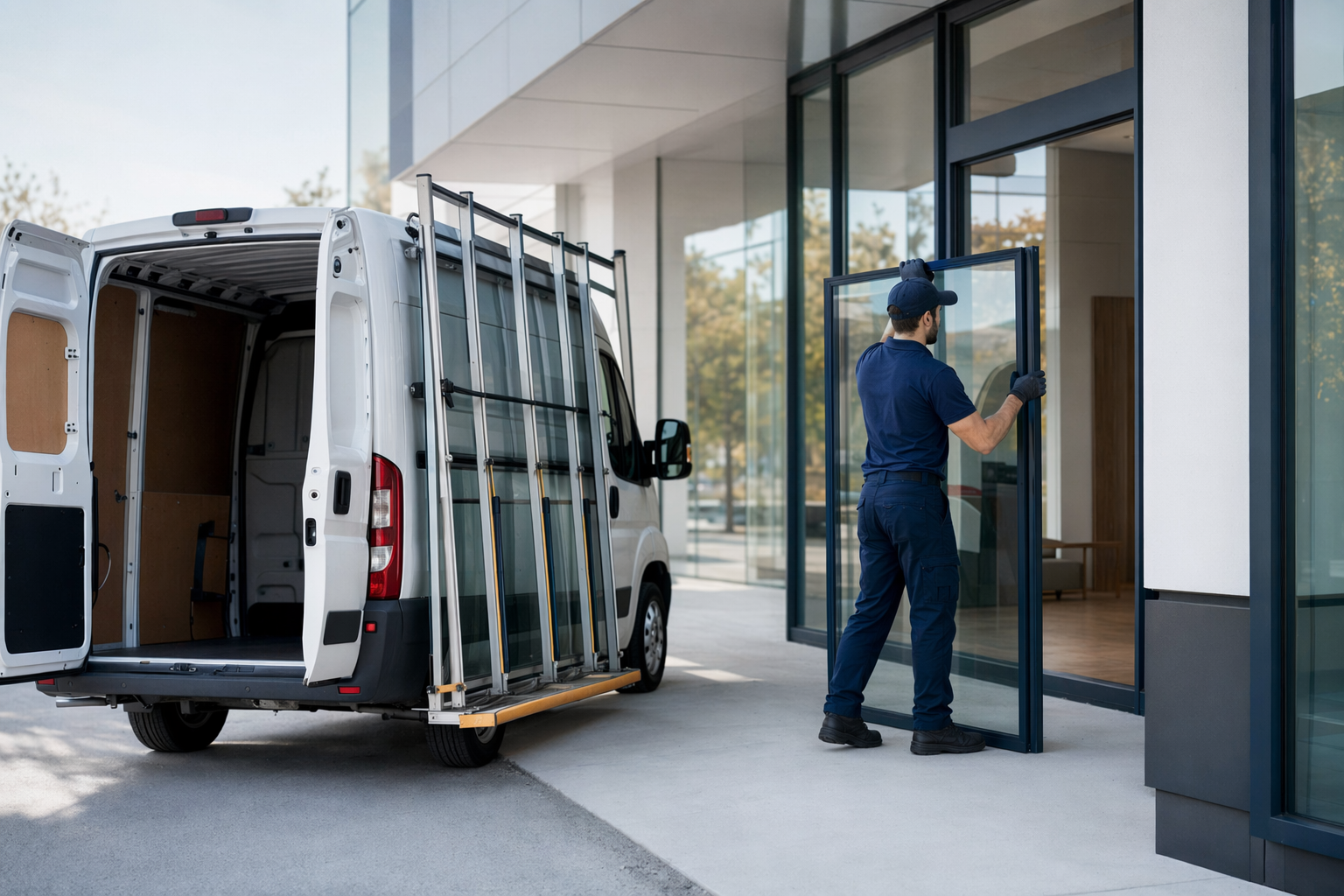
Commercial windows and glass doors are licensed project work, and we help you find the right contractor to bid it.
Common questions
Do you install commercial windows and glass doors?
No. Paneworks is not a glazing company. We provide free information and help you find a licensed, insured commercial glazing contractor.
What is the difference between commercial and residential glass work?
Commercial work is project-based and often involves storefront systems, aluminum framing, safety glazing, code requirements, and coordination with building access. It is not the same as home window repair.
Should I choose tempered, laminated, or insulated glass?
It depends on where the glass is going, what the opening is used for, and the local code. Tempered and laminated are common safety glass choices, while IGUs are used when energy performance matters.
Can you tell me what a project will cost?
We can share general cost context, but not a bid. Final pricing depends on the site, dimensions, hardware, access, and code requirements in your area.
What information should I have ready before I request matching?
Have your name, phone number, ZIP code, project type, and a rough size or count ready. Photos and timing details can also help a contractor review the work.