Problems
Drafty or Leaking Curtain Wall / Storefront
Drafts and water around a commercial storefront or curtain wall usually point to a system problem, not just “bad glass.” We help you understand the likely causes and get matched free with a licensed commercial glazing contractor.
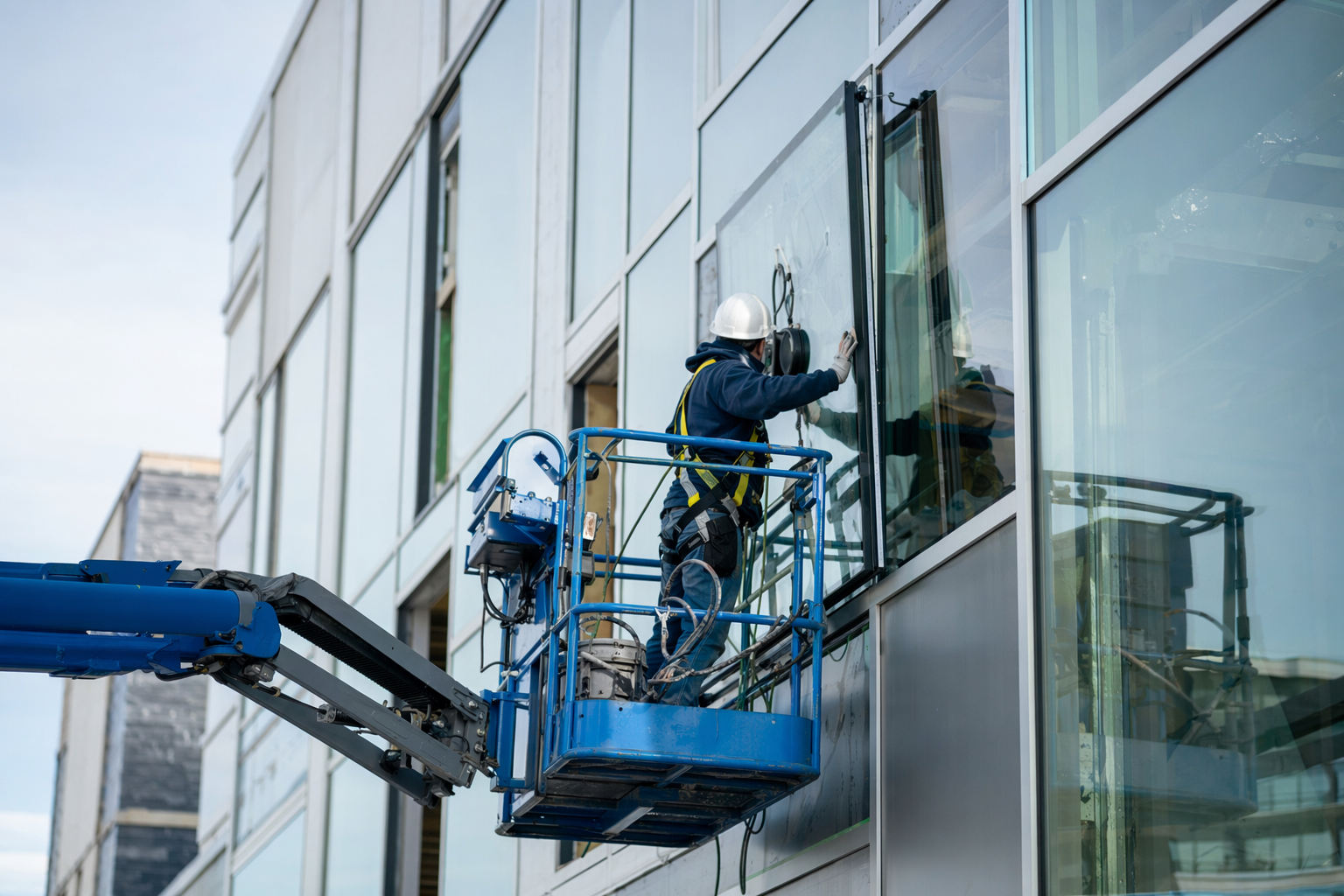
What a draft or leak usually means
In commercial glazing, air and water leaks often come from the joints around the system, not from the glass itself. Common trouble spots include worn gaskets, failed sealant, blocked drainage paths, movement at the frame, or missing or damaged flashing.
A storefront system, curtain wall, and window wall do not manage water the same way. Storefronts are typically lower-rise systems used at ground level. Curtain walls hang off the building structure and are common on larger facades. Window walls are installed floor by floor, usually between slabs. Knowing which system you have helps a licensed glazing contractor narrow down the likely cause.
If you feel drafts, see staining, notice fogging at insulated glass, or find water at interior finishes after rain, the issue may be bigger than one loose joint. A commercial glazing contractor can inspect the system as a whole and determine whether the problem is isolated or part of a broader failure pattern.

Common causes in storefronts and curtain walls
Sealants and gaskets age. Sun, heat, cold, movement, and time can make them shrink, crack, harden, or pull away. When that happens, air infiltration and water intrusion become more likely. In an older system, multiple small failures can add up to noticeable drafts or recurring leaks.
Water management details also matter. Many commercial glazing systems are designed to collect incidental water and drain it back out through weeps and internal pathways. If those paths are blocked, damaged, or poorly detailed, water can back up and appear inside the building.
Leaks may also relate to perimeter conditions where the glazing meets adjacent materials. Flashing, anchors, transitions, and surrounding wall construction all affect performance. That is why a leak is not always a simple “caulk job.” The source can be above, beside, or below where the water finally shows up.
- Failed perimeter sealant or interior wet seals
- Shrunken, brittle, or missing gaskets
- Blocked weep holes or drainage channels
- Movement at framing, anchors, or adjacent wall joints
- Failed insulated glass units causing fogging or condensation between panes
How glass and framing affect comfort and performance
Not all glass performs the same way. Tempered glass is heat-treated to break into smaller pieces if broken. Laminated glass uses a plastic interlayer to help hold broken pieces together. Insulated glass, often called an IGU, uses two or more panes with a sealed air or gas space between them to improve thermal performance. In many commercial systems, leaks and drafts are about the framing and seals, while fogging between panes points more directly to IGU seal failure.
Low-E coatings are thin, nearly invisible layers that help reflect heat. U-factor is a measure of how much heat passes through the assembly; lower generally means better insulation. SHGC, or solar heat gain coefficient, measures how much solar heat comes through; lower can help reduce cooling load in some climates. These ratings matter when a contractor evaluates whether repair or partial replacement makes sense.
Framing matters too. Aluminum is common in storefront and curtain wall systems because it is strong and durable, but aluminum transfers heat easily. A thermal break is a material inside the frame that helps slow that heat transfer. If an older system has poor thermal performance, occupants may feel drafts even when the main issue is a combination of air leakage and cold framing.
When this is more urgent
Some leaks are nuisance problems. Others need prompt professional attention. If water is actively entering during rain, interior flooring is becoming slippery, finishes are swelling, or nearby electrical components may be exposed, a licensed commercial glazing contractor should evaluate it quickly.
The same goes for movement, rattling glass, loose pressure caps, damaged framing, or a glass railing near the affected area that feels unstable. Heavy glass, high work, lifts, and code requirements make this skilled work. It is not a safe DIY repair.
Paneworks is not a glazing company, and we do not diagnose code, structural, or legal issues. We provide general educational information and help you get matched with a licensed, insured commercial glazing contractor for commercial storefront, curtain wall, and related facade work.
What a commercial glazing contractor will usually look at
A professional inspection usually starts with the basic facts: where water appears, when it happens, what elevation is affected, how old the system is, and whether past patch repairs were done. The contractor may review visible sealant joints, gaskets, frame condition, glass type, weeps, perimeter transitions, and signs of movement or deferred maintenance.
They may also compare symptoms to the system type. A ground-floor retail storefront leak is often investigated differently from a multi-story curtain wall leak. The scope might range from localized re-sealing to gasket replacement, glass replacement, perimeter flashing corrections, or larger facade rehabilitation.
If you are gathering options, it helps to know the rough size of the affected area, the number of stories, and whether tenants must stay open during work. You can learn more about commercial glazing project types on our services page and typical budget ranges on our costs page. Costs vary by system, access, glass type, and local market.
How our free matching service works
We help businesses, property owners, building managers, general contractors, and architects find the right kind of commercial glazing contractor for the project. Our service is free to you. We are not selling installation ourselves, and we do not promise a specific price, schedule, or outcome.
To get matched, we only need business contact and project details such as your name, phone, ZIP code, what is leaking or drafty, rough square footage, number of stories, and optional email or language preference. That helps us connect you with a licensed, insured contractor who handles commercial storefront, curtain wall, window wall, and related architectural glass work.
If you are dealing with recurring air or water issues, the goal is to get a qualified professional looking at the whole assembly, not just the wet spot on the floor. Start here to get matched.

If your commercial storefront or curtain wall is drafty or leaking, we help you understand the likely causes and connect you free with a licensed commercial glazing contractor.
Common questions
Is the leak probably coming through the glass itself?
Usually not. In commercial storefront and curtain wall systems, leaks more often come from failed sealant, gaskets, drainage paths, flashing, or perimeter transitions. Fogging between panes is a different issue and may indicate insulated glass unit seal failure.
Can this be fixed with new caulk alone?
Sometimes, but not always. A visible gap may be only one symptom, and the true source may be elsewhere in the system. A licensed commercial glazing contractor can determine whether the problem is localized or part of a larger water-management or movement issue.
What is the difference between storefront and curtain wall?
A storefront is usually a lower-rise commercial framing system common at ground-floor entries and retail fronts. A curtain wall is a larger exterior facade system that hangs off the building structure. They are designed differently, so leak investigation and repair scope can differ too.
How much does commercial leak repair usually cost?
There is no one price. Small commercial sealant or gasket repairs may be far less than larger facade investigations or multi-story access work, and glass replacement can add cost depending on size and type. For typical commercial budget ranges, see our [costs](/costs/) page, but only a contractor can provide a project-specific bid.
What details should I have ready before getting matched?
Have your business name, phone, project ZIP code, system type if known, rough size of the affected area, number of stories, and a short description of when the draft or leak happens. Photos can also help a contractor understand the issue faster.