Free downloads
Commercial Glass Type Quick Guide
Use this quick guide to understand the main commercial glass types and what they are commonly used for. If you need help on a real project, we can help you find a licensed, insured commercial glazing contractor at no cost.
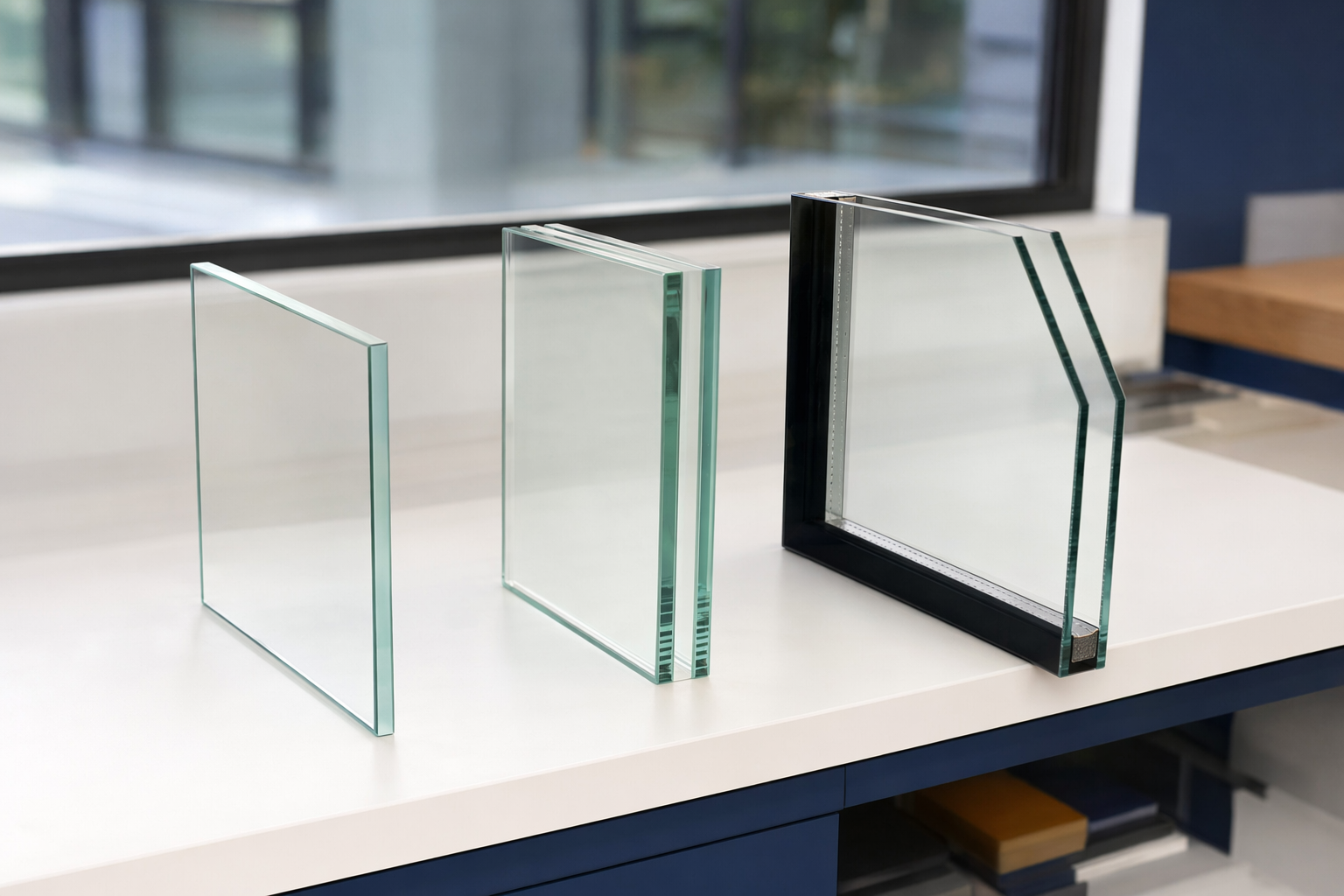
Glass types at a glance
Commercial glass is chosen for safety, energy performance, appearance, and building use. The right option depends on where the glass goes and what the project needs.
Tempered glass is heat-treated to break into small pieces. Laminated glass has a plastic interlayer that helps hold the glass together if it breaks. Insulated glass units, or IGUs, use two or more panes with a sealed air or gas space between them. Low-E is a thin coating that helps control heat flow and sunlight.
These are common building products, but they are not interchangeable. A storefront, curtain wall, glass railing, or commercial door may call for different glass types and framing systems.
Tempered glass
Tempered glass is stronger than standard annealed glass and is widely used where safety matters. When it breaks, it is designed to crumble into small pieces instead of sharp shards.
It is often used for commercial doors, sidelites, partitions, and some shower-like interior applications in commercial spaces. It is also used in some glass railings and other areas that need safety glazing, depending on the design and code requirements.
Tempered glass is a common choice, but it is not always the right choice on its own. A licensed glazing contractor can help confirm whether tempered glass, laminated glass, or a combination is needed for the specific opening.
Laminated glass
Laminated glass is made with two or more layers bonded with a plastic interlayer. If the glass breaks, the pieces tend to stay attached to the interlayer, which helps reduce fall-through risk and can improve security.
It is often used for glass railings, overhead glazing, storefronts, and areas where glass retention matters. It can also help with sound control and may be used where extra protection is needed.
Laminated glass is common in commercial work because it is a safety glass option. The exact build-up can vary, so a pro should check thickness, panel size, wind load, impact needs, and code requirements.
Insulated glass units and low-E
An insulated glass unit, or IGU, is a sealed assembly of two or more panes. The space between the panes helps reduce heat transfer, which can improve comfort and energy performance.
Low-E, short for low emissivity, is a thin coating on glass that helps manage solar heat and interior heat loss. In plain English, it can help a building stay cooler or warmer depending on the climate and glass selection.
IGUs and low-E are common in commercial windows, curtain walls, and window walls. The best choice depends on the building location, orientation, and code requirements. Costs and performance vary by jurisdiction and project specs.
Where each type is commonly used
Different systems use different glass for different reasons.
Storefronts and commercial entrances often use tempered or laminated glass, sometimes in insulated units for better energy performance. Curtain walls and window walls commonly use IGUs with low-E coatings. Glass railings usually rely on laminated safety glass, while interior partitions may use tempered or laminated glass depending on the design.
If you are not sure what your project needs, that is normal. A licensed commercial glazing contractor can review the drawings, field conditions, and code-related requirements and then bid the right system.
What to check before you request bids
Before you ask for pricing, it helps to know a few basics: the project type, rough square footage, number of openings or floors, and whether the work is new construction or replacement. Photos and drawings also help.
You do not need to know every technical detail. But the more clearly the scope is described, the easier it is for a contractor to prepare a useful bid.
If you want help, use our free matching service through Get matched or browse more plain-language guides in Tools.
- Project type: storefront, curtain wall, window wall, railing, partition, or door
- Rough size: square footage, number of panels, or number of stories
- Site details: address or ZIP, access limits, and whether the building is occupied

This page explains the main commercial glass options in simple terms so you can talk about your project clearly and get matched with the right licensed glazing contractor.
Common questions
What is the difference between tempered and laminated glass?
Tempered glass is heat-treated so it breaks into small pieces. Laminated glass uses an interlayer that helps hold broken glass together, which is useful when retention or added safety is important.
Do I need insulated glass for every commercial project?
No. IGUs are common in exterior systems where energy performance matters, but interior partitions or some specialty openings may use other glass types. The right choice depends on the system, location, and project goals.
Is low-E a type of glass?
Low-E is a coating, not a separate glass type. It is often applied to insulated glass to improve energy performance and help control heat gain or heat loss.
Can you tell me which glass I need?
We can help you understand the basics and connect you with a licensed commercial glazing contractor who can review your project. We do not design, install, or provide code or structural advice.