How we've helped
A building manager chasing a curtain-wall water leak
This anonymized story shows how we helped a building manager respond to a curtain-wall water leak—find the right licensed commercial glazing contractor, clarify scope, and move toward a safe repair plan without guessing.
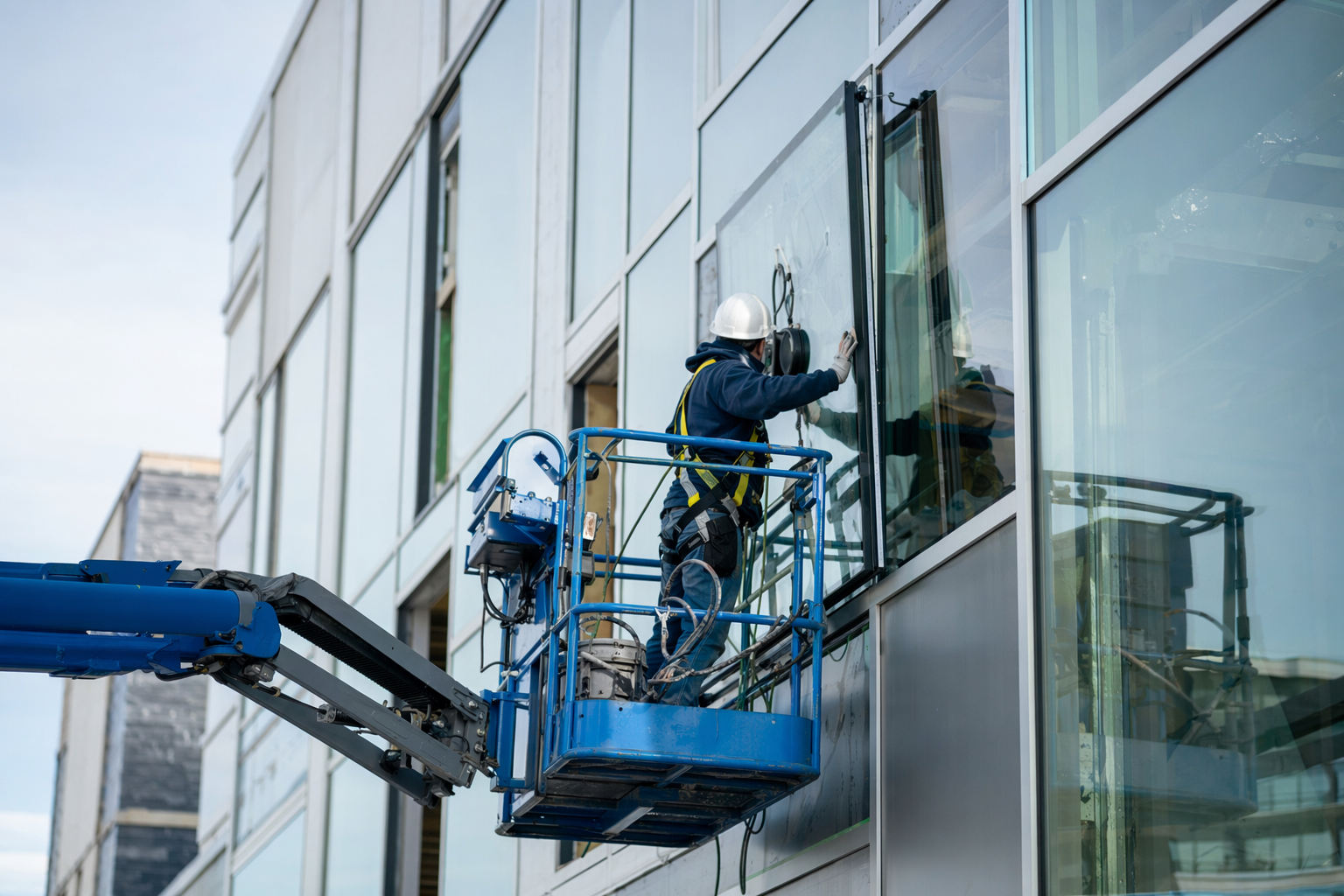
The call: a curtain-wall water leak that wouldn’t wait
A building manager noticed dampness near the perimeter of a curtain-wall façade after a rainstorm. It wasn’t a small drip either—there were signs of water intrusion around interior finishes, and they needed to understand what was failing and where.
The manager also knew the urgency wasn’t just comfort. Large glass systems are heavy, installed at height, and tied to the building’s envelope performance. Handling this kind of issue without the right experience can create safety risks and make the problem harder (and more expensive) to fix.
They used Paneworks to connect with licensed, insured commercial glazing contractors who work on architectural glazing—like curtain walls, storefronts, and window wall systems. Paneworks is a FREE matching service, not a glazing company.

What “curtain wall” means (and why leaks can be tricky)
A curtain wall is a façade system—typically framed in aluminum with glass panels and designed to manage water, air, and thermal movement. Unlike a simple window, it’s a coordinated system of components: framing, glass, gaskets, sealants, pressure equalization details, and drainage paths.
When leaks show up, it’s often not the glass itself. Water can track along joints, behind interior trim, or through areas where movement happens (temperature changes, building settlement, vibration). That’s why contractors usually need to confirm the source before proposing a remedy.
In this story, the contractor team needed to assess the curtain-wall configuration and identify which parts of the system were involved—without assuming the fix.
Turning uncertainty into a scoped project
The manager’s first challenge was translating “we have a leak” into a clear scope that could be bid and scheduled. Paneworks helps you share project basics so matched contractors can ask the right questions.
The key details the manager provided included the building ZIP code, roughly how many stories the affected area covered, and what they’d observed after the storm. They also noted where the interior symptoms appeared (for example: near a seam line, at a corner, or around specific bays).
From there, the contractor team focused on practical discovery: verifying conditions on site, checking façade interfaces, and understanding whether the issue likely involved seal failure, drainage/weep details, or movement-related gaps—rather than guessing.
Glass basics the team used to communicate clearly
In curtain-wall work, contractors may discuss glass types and performance basics in plain terms. For example, many façade systems use insulating glass units (IGUs), which sandwich two or more glass lites with a spacer and internal seal. If an IGU seal fails, condensation or fogging can show up, though water-intrusion symptoms often point to framing/sealant issues first.
They also discussed “safety glass” options. Depending on the application, glazing may include tempered glass or laminated glass. Laminated glass has an interlayer that helps keep fragments together if the glass breaks—important for safety at height.
Even if the leak isn’t caused by the IGU, contractors still confirm what’s installed (including coatings like low-E for energy performance) so replacement materials match the system’s design intent.
Repair is bid-and-scheduled work—especially at height
After review, the matched contractors helped the manager define the work as a scheduled façade project—coordinated with site access, weather planning, and safety controls. Because this is heavy work with lifting and fall risk, only licensed and insured commercial glazing contractors should handle it.
The manager avoided “quick fixes” that don’t address the underlying water path. Instead, they aimed for a plan that repairs or replaces the correct curtain-wall components and restores the system’s intended water management.
No one promised an outcome on the first visit. That’s normal for building-envelope issues: contractors typically confirm the source, then plan the repair with materials and sequencing that fit the building.
What changed after Paneworks connected them
By using Paneworks, the manager got matched with contractors who routinely handle commercial architectural glazing scopes—curtain walls and the surrounding systems that affect water performance. The manager felt less stuck and more confident moving from “mystery leak” to a project that could be properly scoped.
The process stayed professional and practical: share the essentials, let licensed pros evaluate the façade, and move toward a bid-and-schedule approach. Paneworks doesn’t fabricate, install, or repair anything. We help you find the right licensed, insured commercial glazing contractor for the work.
If you’re dealing with a leak, don’t ignore it. Still, take it calmly—identify the scope and let the licensed team diagnose the actual path water is taking through the curtain wall.

A building manager found a curtain-wall water leak, then used Paneworks to connect with licensed commercial glazing contractors to diagnose the system and scope a safe, bid-and-schedule repair.
Common questions
How urgent is a curtain-wall water leak compared with other building issues?
It can be urgent, especially if interior finishes are getting wet, if mold risk is a concern, or if water could reach electrical/mechanical spaces. However, curtain-wall leak diagnosis usually still requires a safe on-site assessment to avoid patching the wrong component.
Is the leak usually caused by broken glass?
Not usually. Leaks in curtain-wall systems are commonly tied to sealants, gaskets, joints, drainage/weep details, or areas affected by movement. Contractors typically verify the water path before deciding what needs replacement.
What’s the difference between tempered, laminated, and insulated (IGU) glass in commercial work?
Tempered glass is strengthened and breaks into small pieces. Laminated glass uses an interlayer to help keep fragments together if broken. IGU describes insulated units—glass lites separated by a spacer with seals to improve thermal performance—often discussed when evaluating façade performance and condensation or seal failure.
What information should a building manager gather before requesting bids?
Collect the location of the leak (which interior area and which façade zone/bays if known), when it appears (after rain, after wind, after temperature swings), photos, and any building details you have (stories, approximate square footage of the affected area, and the façade system type). Clear observations help contractors scope the work accurately.
How does Paneworks help without being a contractor?
Paneworks is a FREE matching service. We help you find and get connected with licensed, insured commercial glazing contractors for architectural glass and glazing scopes. You still receive professional site evaluation and bids from the contractor.