Problems
Failed Door Closers & Entrance Hardware
A door closer or entrance that will not close, latch, or seal can affect safety, security, and energy use. We help you find a licensed, insured commercial glazing contractor for a practical fix or replacement project.
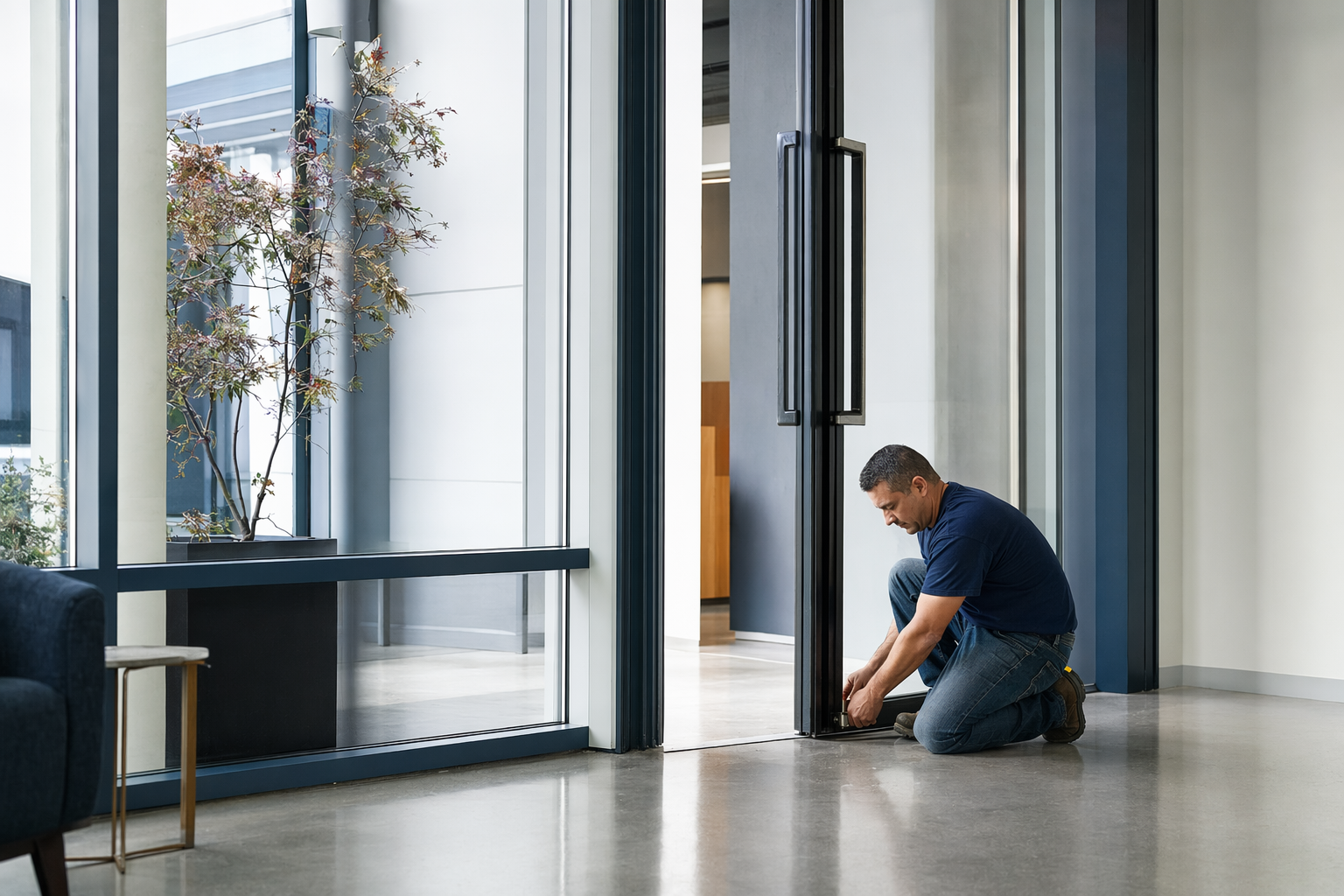
What usually fails at a commercial entrance
Door closers, pivots, hinges, patches, locks, panic hardware, and weather seals all work together. If one part is worn, misaligned, or damaged, the door may swing too fast, slam, drag, not latch, or leave gaps at the frame.
On glass entrances, the issue can also involve the framing, glass setting blocks, or the way the door was adjusted after earlier work. Because these are heavy glass systems and life-safety components, the right approach is a scoped inspection and repair plan from a licensed commercial glazing contractor.
If the entrance is hard to open, does not close fully, or no longer seals against air and water, it is worth addressing soon. It is not the same as a home door repair; this is commercial architectural glazing work with code and hardware requirements.
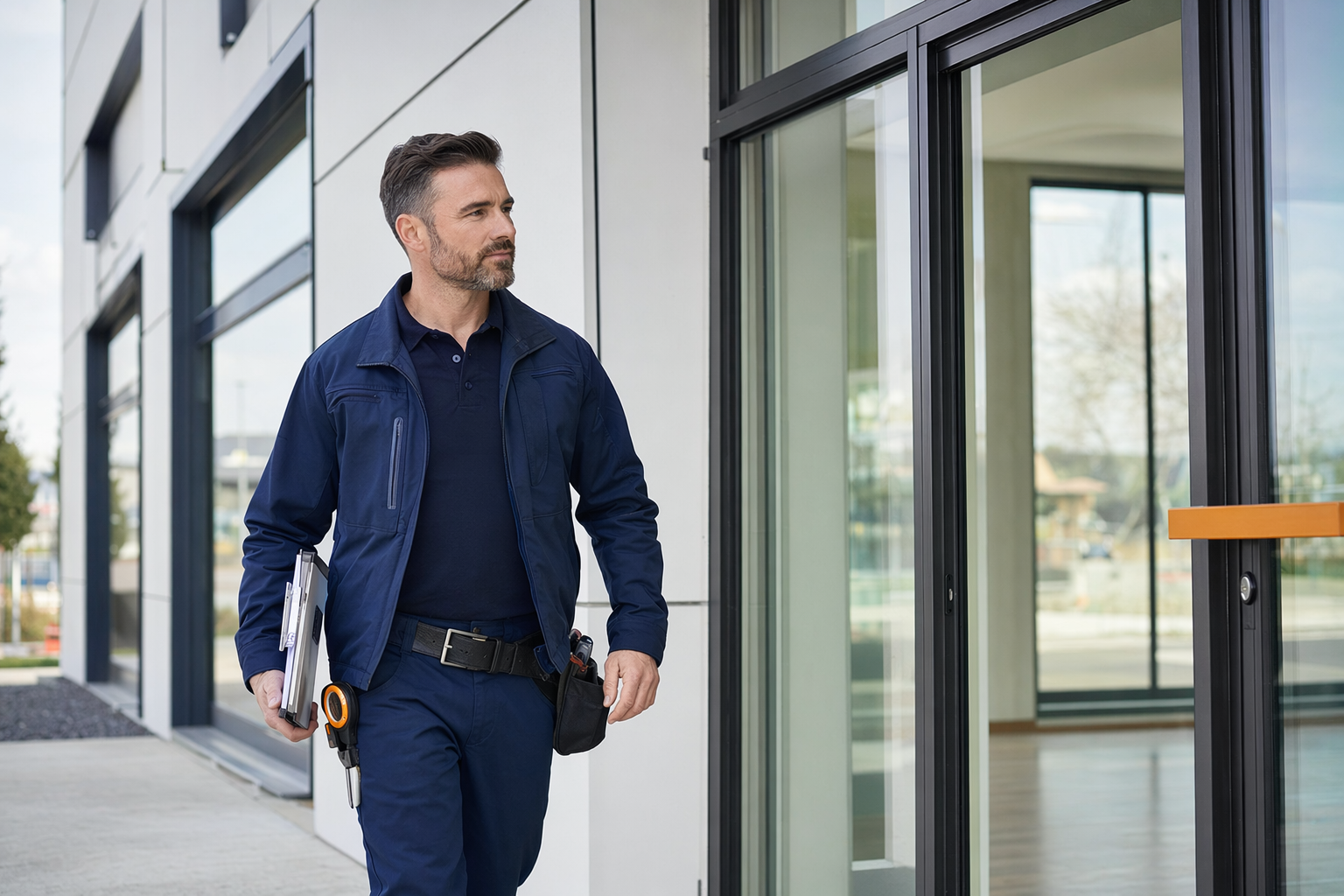
Why it matters for code, security, and comfort
A failing closer or misaligned entrance can create more than a nuisance. It may let the door stay open, fail to latch, or prevent proper fire or egress function where applicable. It can also make the storefront easier to access and can increase drafts, noise, and HVAC loss.
In many buildings, the entrance is part of the overall performance of the storefront system. A gap at the door can affect the seal of the whole opening, especially if the glass storefront, frame, and hardware were installed as one system.
Because code requirements vary by jurisdiction and by building type, a contractor should review the actual entrance hardware, door type, and frame conditions before recommending repairs or replacement.
Common system terms, in plain English
A storefront is the ground-floor glazed wall system you often see at retail and restaurant entrances. It usually uses aluminum framing and framed doors.
A door closer is the device that helps the door return to the closed position in a controlled way. A pivot, hinge, or floor closer supports the door’s movement. Panic hardware is the push bar or exit hardware used on some doors for safe egress.
Weather seals are the soft strips that help block air and water. If the door is not lining up correctly, even a good seal will not work well. In some cases, the solution is a hardware adjustment; in others, it is a full hardware replacement or a larger entrance repair.
What a commercial glazing contractor can check
A licensed commercial glazing contractor can inspect the entrance as a system, not just one part. That usually includes the closer type, door alignment, frame condition, latch engagement, locks, thresholds, sweeps, seals, and any glass-to-metal connection points.
They can also tell whether the problem is caused by normal wear, impact damage, building movement, or a previous install that needs correction. If the door or surrounding glass is damaged, they can help scope the work and explain whether repair, replacement, or both makes sense.
We do not do the work ourselves. We help you find a contractor who can evaluate the entrance and bid the project properly.
What affects cost on this kind of project
Pricing depends on the door type, hardware brand and finish, how much needs replacement, and whether the problem is limited to the closer or includes the frame, glass, seals, or panic hardware. Access, after-hours work, and the need for lifts or specialty equipment can also change the scope.
Typical costs can range from a smaller hardware adjustment to a larger entrance replacement project. For general commercial glazing pricing context, see project cost ranges. Those are only typical ranges, not quotes.
If you need help getting the right trade involved, start at get matched free. We connect you with a licensed, insured commercial glazing contractor at no cost to you.
When to move quickly
If the entrance will not latch, will not close at all, has broken glass, is scraping badly, or appears unsafe, treat it as a priority. A broken or unstable entrance can create security and liability concerns and may disrupt business operations.
If the issue is minor, like a closer that slams or does not return fully, it may still be worth scheduling soon so the hardware does not wear out faster or damage the frame.
For more about the kinds of commercial glazing services involved in storefront and entrance work, visit services.
How our free matching service works
Tell us the business name, phone number, ZIP code, what is happening with the entrance, and any rough details you know, such as door count, approximate square footage, or building height. Email and preferred language are optional.
We use that project information to help connect you with a licensed, insured commercial glazing contractor. The service is free for you. Participating contractors pay a flat fee to be matched; your cost does not change because of that.
We do not collect sensitive personal information, and we do not give structural, code, legal, or electrical advice. We simply help you find the right commercial glazing pro for the job.

If a commercial glass entrance will not close, latch, or seal, it needs a licensed pro to inspect the door hardware and glazed system, and we can help you get matched free.
Common questions
Can a closer be repaired, or does it need replacement?
Sometimes a closer only needs adjustment or a part replacement. If the body is leaking, the arm is damaged, or the door has been misaligned for a while, replacement may be the better commercial repair path.
Is this the same as residential door repair?
No. This page is about commercial architectural glazing and entrance hardware for storefronts and similar building systems. Those projects use different hardware, heavier glass, and different code considerations.
Will you tell me the exact fix or price?
No. We can explain common causes and help you find a licensed commercial glazing contractor to inspect the entrance and bid the work. Actual pricing depends on the hardware, the door system, and local conditions.
What information should I have ready?
Have your business name, phone number, ZIP code, a short description of the problem, and any rough details like number of doors, approximate square footage, or building height. Optional email and language preference can also help.