Quick answers
What is safety glazing and where is it required?
Safety glazing is commercial glass designed to help reduce injury if it breaks. It’s often required by building codes for certain locations, heights, and uses—and we can help you find a licensed commercial glazing contractor at no cost.
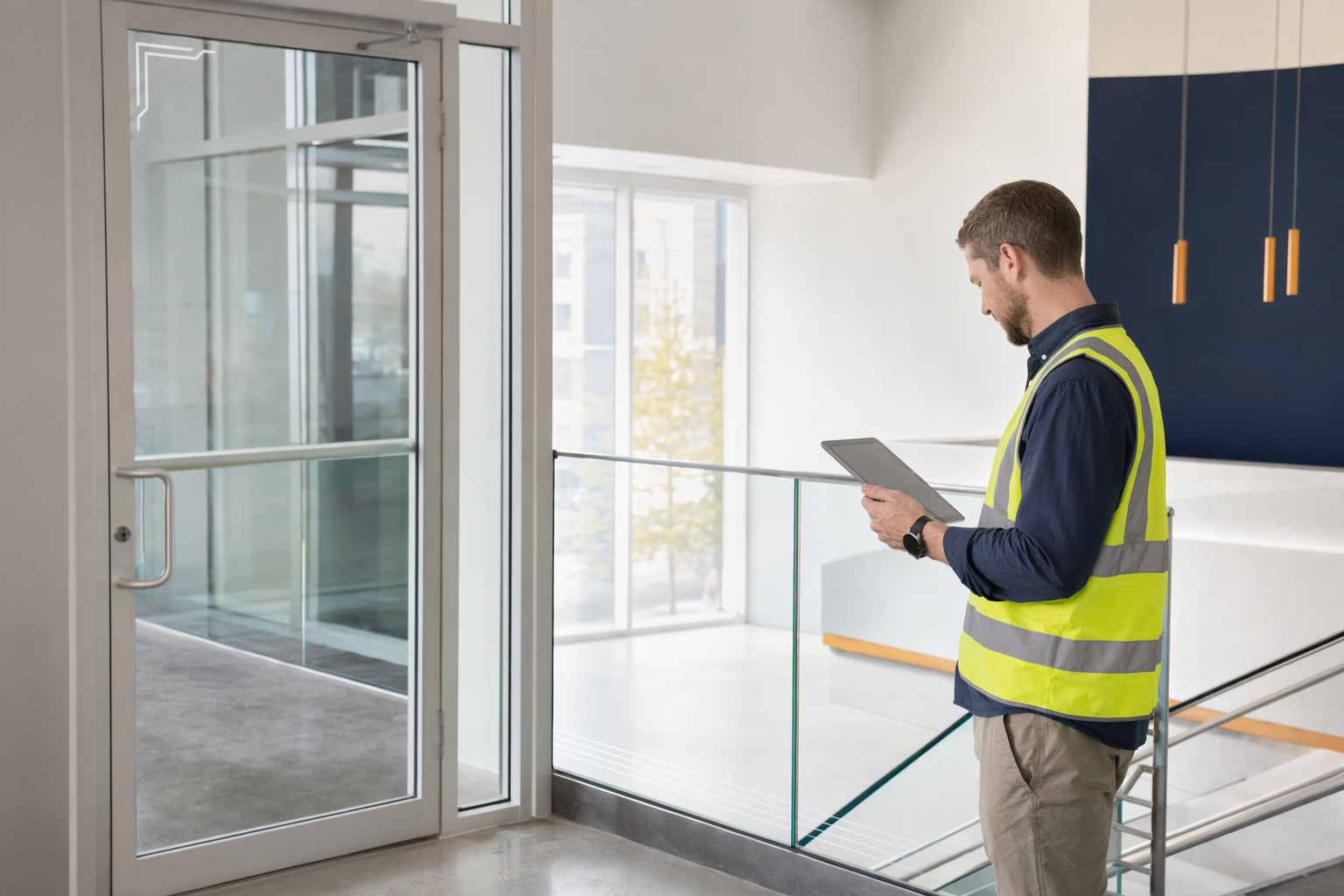
Safety glazing in plain terms
Safety glazing is glass that’s meant to be less likely to cause severe injuries when it breaks. Instead of shattering into dangerous sharp pieces, safety glass is designed to either stay in place or break into less hazardous pieces.
In commercial buildings, “safety glazing” is usually achieved with specific glass types and (sometimes) specific glazing systems. The right approach depends on where the glass is located—like entrances, lobbies, stairways, and areas where people could be hit.
Because the work involves heavy materials, high-level tools, and code requirements, safety glazing is typically scoped, bid, and scheduled by licensed, insured commercial glazing contractors—not by unlicensed general handling.

Where it’s commonly required (by location and risk)
Building codes don’t treat all glass the same. Safety glazing is commonly required where breakage could impact people—such as at or near pedestrian traffic areas, doors, sidelites, and areas within reach.
You’ll also see requirements tied to things like glass height, reach zones, and the chance of objects striking the glass. Common examples include:
• Glass in doors and door sidelites
• Glass near walking surfaces and stair landings
• Guard systems (like glass railings) where falls could occur
Even when the intent is similar, exact thresholds can vary by jurisdiction and project type. That’s why it’s important to confirm requirements for your specific location and building use.
Common safety-glass types you’ll hear about
Different glass types are used to meet “safety” intent, and each behaves differently when stressed or broken.
Tempered glass is heat-treated so that if it breaks, it typically fractures into smaller, less sharp pieces. It’s commonly used in commercial windows and some doors where permitted.
Laminated glass uses a layered build—often with an interlayer—that can help hold glass together if it breaks. This can help reduce fallout and injury risk, which is why laminated glass is often specified in higher-impact locations.
In many projects you’ll also see insulated glass units (IGUs), which combine multiple panes with a spacer. IGUs can include safety glazing choices (tempered or laminated components). For performance, you may also hear about Low-E coatings and thermal values like U-factor and SHGC.
How glazing systems affect compliance (not just the glass)
Safety glazing isn’t only the glass pane. The glazing system—how the glass is framed, secured, and installed—matters for performance, durability, and meeting the intended safety outcome.
For commercial projects, common system categories include storefront systems, curtain walls, and window walls. Each has different framing details and typical glass configurations.
For example, aluminum framing and thermal breaks can affect energy performance, while glass bite, setting blocks, and sealant choices affect how the glass is supported. These details influence how well the system performs over time.
If you’re preparing to bid or scope the work, ask your contractor to confirm the specified glass type and the glazing system details are aligned with your local requirements.
How to confirm what your project needs
The safest way to confirm where safety glazing is required is to follow your local building code and project documents. Your building’s architect or code team typically coordinates code intent; the glazing contractor then prepares a compliant scope.
Helpful inputs to gather before you ask for quotes:
• The building address/ZIP (rules can vary by jurisdiction)
• What the glass is used for (door, sidelites, lobby glazing, railing, etc.)
• Approximate size and layout (so the right glass type and quantity can be scoped)
• Number of stories and whether work is interior, exterior, or both
If you’re not sure where to start, you can begin with our help guidance, and then get matched with a licensed commercial glazing contractor who can review your project scope (not your personal data).
Timing and urgency: when to treat it as urgent
A safety glazing issue is not always an emergency, but some situations should be handled quickly. If there is broken glass, a failed glass railing, or an entrance glass panel that no longer provides protection, it may create an immediate safety concern.
Because glass is heavy and work at height can be hazardous, replacements should be planned with a licensed and insured commercial glazing contractor. They can manage access, protection, and compliant installation.
For planning support, see costs for typical budgeting factors in commercial glazing. Costs and timelines depend on glass type, system type, building height, and the complexity of your existing conditions.

Safety glazing is code-required commercial glass designed to reduce injury risk in specific locations, and we can help you connect with a licensed contractor to scope your project correctly.
Common questions
Is all glass in commercial buildings considered “safety glazing”?
No. “Safety glazing” applies to specific locations and uses where codes require added protection. Many commercial buildings use different glass types in different areas based on risk and code thresholds.
What’s the difference between tempered and laminated safety glass?
Tempered glass breaks into smaller pieces, which can reduce sharp injury risk. Laminated glass is built with layers that can help hold the glass together if it breaks, reducing fallout.
Does safety glazing only matter for doors?
Not only doors. Safety glazing is commonly required for sidelites, areas near walking surfaces, stair-related glazing, and other locations where people could be struck or where breakage could cause injury.
If my glass is safety glass, does it automatically meet code everywhere?
Not automatically. Code compliance depends on the glass type and the installation location, height/reach zone, and the approved glazing system details. Local requirements can vary, so it’s important to verify for your specific project.
How can I get a licensed contractor to scope safety glazing correctly?
We can help you get matched with a licensed, insured commercial glazing contractor at no cost. Share your project type, approximate glass areas, and the building ZIP, and a contractor can review the scope needed for a compliant solution.