Quick answers
What's the difference between tempered and laminated glass?
Tempered and laminated glass are both common in commercial buildings, but they behave differently when broken. Learn the practical difference and then use Paneworks to get matched with a licensed commercial glazing contractor—free.
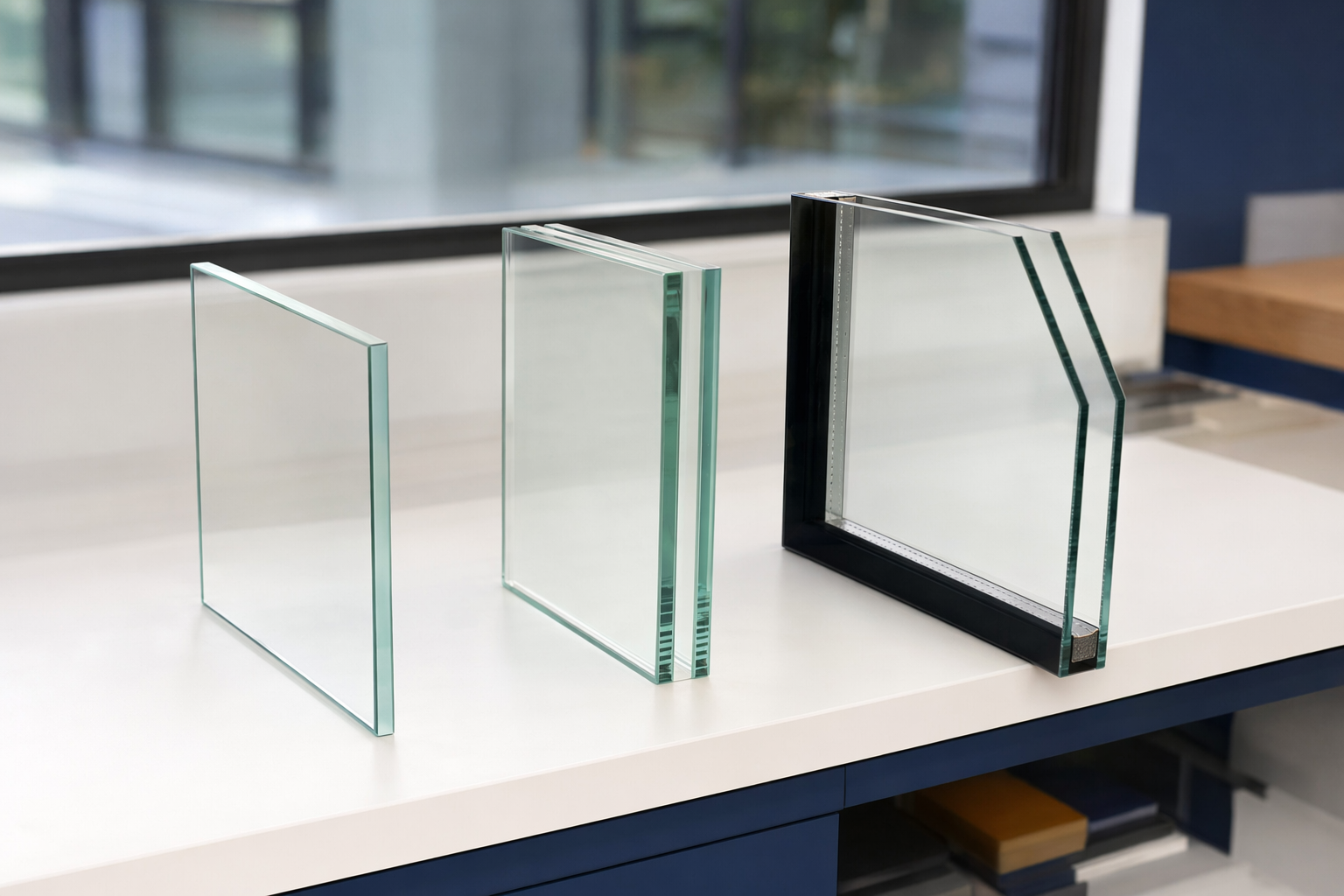
Tempered vs. laminated: the quick difference
Tempered glass is strengthened heat-treated glass. If it breaks, it usually shatters into small, relatively blunt pieces.
Laminated glass is two or more glass layers bonded to an interlayer (often a plastic film). If it breaks, the glass may crack, but the layers typically stay attached, helping hold the opening together.
In commercial projects, the choice is usually about safety expectations, how the glass is used (doors, sidelights, railings, storefronts), and the risk the building needs to manage—not just cost.
- Tempered: shatters into small pieces when broken
- Laminated: stays “held together” by the interlayer when broken

How each type behaves when it breaks
Tempered glass is designed to fail in a way that can reduce the chance of large, sharp fragments. That’s why it’s common in many commercial window and door applications.
Laminated glass is designed to reduce the chance of full separation. Because the interlayer can keep broken glass from falling out as easily, laminated is often chosen when staying in the opening matters (for example, certain exterior openings or locations where debris containment is a priority).
If you’re deciding for a specific project, a licensed commercial glazing contractor can help translate “what the code and the project goals require” into the correct glass type and build-up.
Where you’ll see them in commercial glazing
You’ll often see both types in storefront systems, commercial door and sidelight glazing, and curtain wall or window wall projects—where the building envelope and safety performance matter.
You may also see laminated glass specified for glass railings, partitions, and other locations where remaining stable after breakage is a key concern. The exact requirement can vary by jurisdiction and by the glass configuration.
If your building has existing glass and you’re planning a replacement, the original glass type matters. Getting the “same or approved equivalent” is typically part of an accurate scope and bid.
Safety glass is not one single thing
People sometimes say “safety glass” like it’s a single product. In reality, safety expectations can come from different glass types (tempered, laminated) and different design details (thickness, framing, and how the glass is installed).
Code requirements can depend on the glass location: whether it’s at walking level, where a person could be hit by glazing, whether it’s in a door system, and how the railing or barrier is used.
Because heavy glass and high work are dangerous, glazing is typically scoped and scheduled as a professional, licensed project—especially on commercial facades, curtain walls, and overhead storefront systems.
- “Safety glass” is about performance in a specific location, not just the label
- Where the glass is installed often drives the requirement
Performance beyond breakage: coatings, insulation, and thickness
Tempered or laminated describes how the glass behaves when it breaks. But commercial glazing also depends on performance factors like thermal insulation and solar control.
For example, insulated glass units (IGUs) combine multiple lites (panes) with a sealed air space or gas fill. Coatings such as low-E can reduce heat transfer and glare. Terms like U-factor (insulating value) and SHGC (solar heat gain) are common in building energy discussions.
These choices can affect the thickness, weight, and how the glass fits the framing system. That’s another reason to scope the job carefully and get a proper bid. For a general overview of typical budgeting, see Typical commercial glazing costs.
Next step: confirm requirements, then get matched with a pro
If you’re updating storefront glass, replacing a door lite, or working on a curtain wall or window wall, the right glass type depends on the project specs and local rules. Avoid guessing—use the project documents and get a licensed, insured commercial glazing contractor to scope it.
Paneworks is a FREE service that helps you find and get matched with a licensed commercial glass & glazing contractor. Share your project type, rough size (like square footage or stories), your ZIP, and how soon you need help—and we’ll connect you with qualified pros for bidding and scheduling.
If you’re not sure what to ask, start with How Paneworks matching works and general help resources.

Tempered glass shatters into smaller pieces, while laminated glass stays held together by an interlayer—choosing the right one depends on your commercial project requirements, and Paneworks can help you find a licensed glazing contractor for the bid.
Common questions
Which is safer for commercial doors: tempered or laminated?
It depends on the glass location and what your project specifications and local requirements call for. Tempered is often used because it breaks into smaller pieces, while laminated is often chosen when holding the glass in place matters after breakage. A commercial glazing contractor can confirm what’s appropriate for your door and framing system.
Can laminated glass replace tempered glass (or vice versa) in an existing storefront?
Sometimes, but not automatically. The framing, thickness, structural bite, and code expectations can all affect whether a “swap” is acceptable. You’ll want a contractor to review the existing conditions and confirm the approved equivalent for your scope.
What does IGU mean, and does it change tempered vs. laminated?
IGU means insulated glass unit—multiple glass lites sealed together, often with an air space or gas. You can still have tempered or laminated within an IGU build-up, depending on the design goals and safety requirements.
Is “low-E” related to tempered or laminated?
No. Low-E is a coating applied to glass to control heat and glare. Tempered vs. laminated describes the safety/behavior when broken, while low-E relates to energy performance.
How urgent is it to replace broken commercial glass?
Some glazing failures are urgent because they can affect safety and weather protection, especially with storefronts, curtain walls, and glass railings. Even then, the correct approach is to stabilize the area and bring in a licensed commercial glazing contractor for assessment, scoping, and scheduling.