Quick answers
How much does a commercial storefront cost?
A commercial storefront cost depends on size, glass type, framing, doors, and site conditions. We help you understand the main cost drivers and connect you with a licensed commercial glazing contractor at no cost.
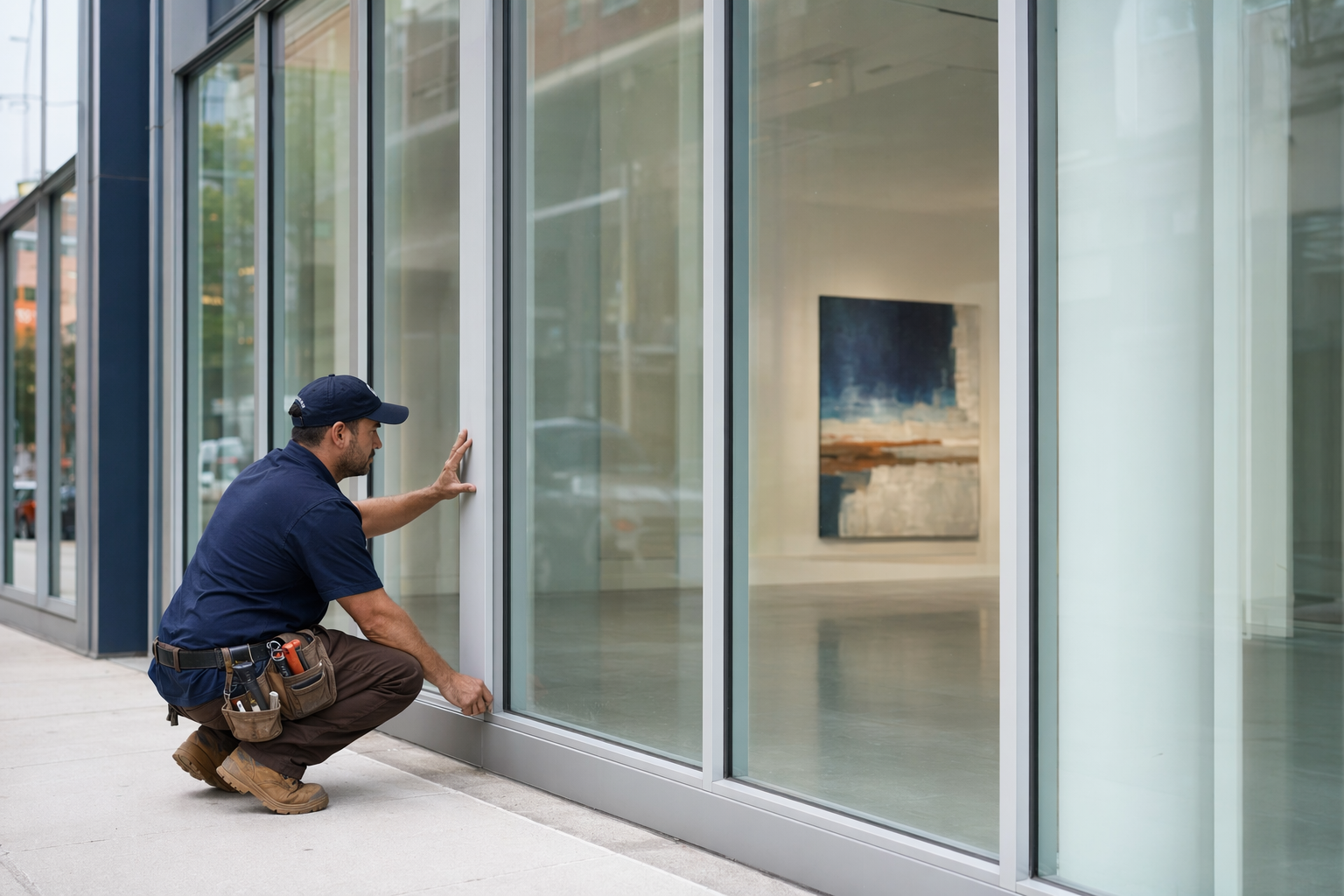
Short answer
There is no single storefront price that fits every project. A small basic storefront can cost much less than a large retail front with insulated glass, custom doors, and finish upgrades.
Most storefront work is scoped and bid as a project, not priced like a simple off-the-shelf item. The final number usually depends on the opening size, number of entries, glass specifications, framing system, and whether the job is a replacement or new build.
If you want a more accurate budget range for your project, we can help you find a licensed commercial glazing contractor who can review the details and provide a bid.

What changes the cost
The biggest cost driver is usually the total square footage of glass and framing. Bigger openings need more material, more labor, and often more equipment.
Glass type matters too. Tempered glass, laminated safety glass, and insulated glass units (IGUs) all cost differently. IGUs often cost more because they help with energy performance and comfort, but they also add complexity.
The framing system affects price as well. Basic aluminum storefront framing is usually less expensive than more custom systems or assemblies that need extra thermal performance. Door hardware, sidelites, transoms, finish color, and custom details can also raise the budget.
Storefront vs curtain wall vs window wall
Commercial buyers often use these terms loosely, but they are not the same. A storefront is the ground-level glass system used for retail, restaurants, offices, and similar spaces. It is usually non-structural and spans the front of the building.
Curtain wall is a more complex exterior wall system that hangs from the building structure and can span multiple floors. It is usually more expensive than storefront because it needs more engineering, heavier components, and careful coordination.
Window wall is often used in multi-story buildings and sits between floor slabs. It can be a different price point from curtain wall depending on the design. A contractor can help explain which system fits your project and budget.
Common price ranges, in plain English
For budgeting only, small commercial storefront projects may start in the low thousands and can rise quickly as the opening gets larger or the design gets more custom. A simple replacement on an existing opening is usually less costly than a full new storefront with doors and finish work.
Costs are often discussed as a typical range per square foot for storefront glass and framing, but that range changes by city, code, glass performance, access, and scheduling. If the work needs lifts, night work, occupied-building protection, or special coordination, the price can go up.
For accurate pricing, see our cost help or get matched with a licensed commercial glazing contractor who can review your project details.
Why bids can vary so much
Two contractors can look at the same storefront and price it differently because they may assume different glass performance, hardware, lead times, demolition scope, or finish details. One bid may include more complete work, while another may exclude items like permits, engineering, or patching around the opening.
That is why commercial glazing is usually bid from drawings, photos, field measurements, or a site visit. The goal is not just to find the lowest number. It is to make sure the scope is clear and the system is appropriate for the building.
Because storefront and glass entrance work can involve heavy materials, high work, and building code requirements, it should be handled by a licensed, insured commercial glazing contractor.

A commercial storefront can cost a little or a lot depending on size, glass, framing, doors, and site conditions, so the best next step is to compare real bids from licensed commercial glazing contractors.
Common questions
Is storefront glass priced by the square foot?
Often, yes, but only as a starting point. Real storefront bids usually also include framing, doors, hardware, access, labor, and site conditions.
What is the cheapest commercial storefront option?
Usually a simple aluminum storefront with standard safety glass and a straightforward opening. The exact cost still depends on size, location, and code requirements.
Does insulated glass cost more than single-pane glass?
Usually yes. IGUs cost more, but they are common in commercial work because they can improve energy performance and comfort.
Can Paneworks give me a quote?
No. We are not a glazing company. We help you find and connect with a licensed commercial glazing contractor who can provide a project-specific bid.