Guides
Glass railing & guardrail code basics
Glass railings and guardrails have specific commercial code requirements. This guide explains the basics in plain language—and helps you get matched free with a licensed commercial glazing contractor.
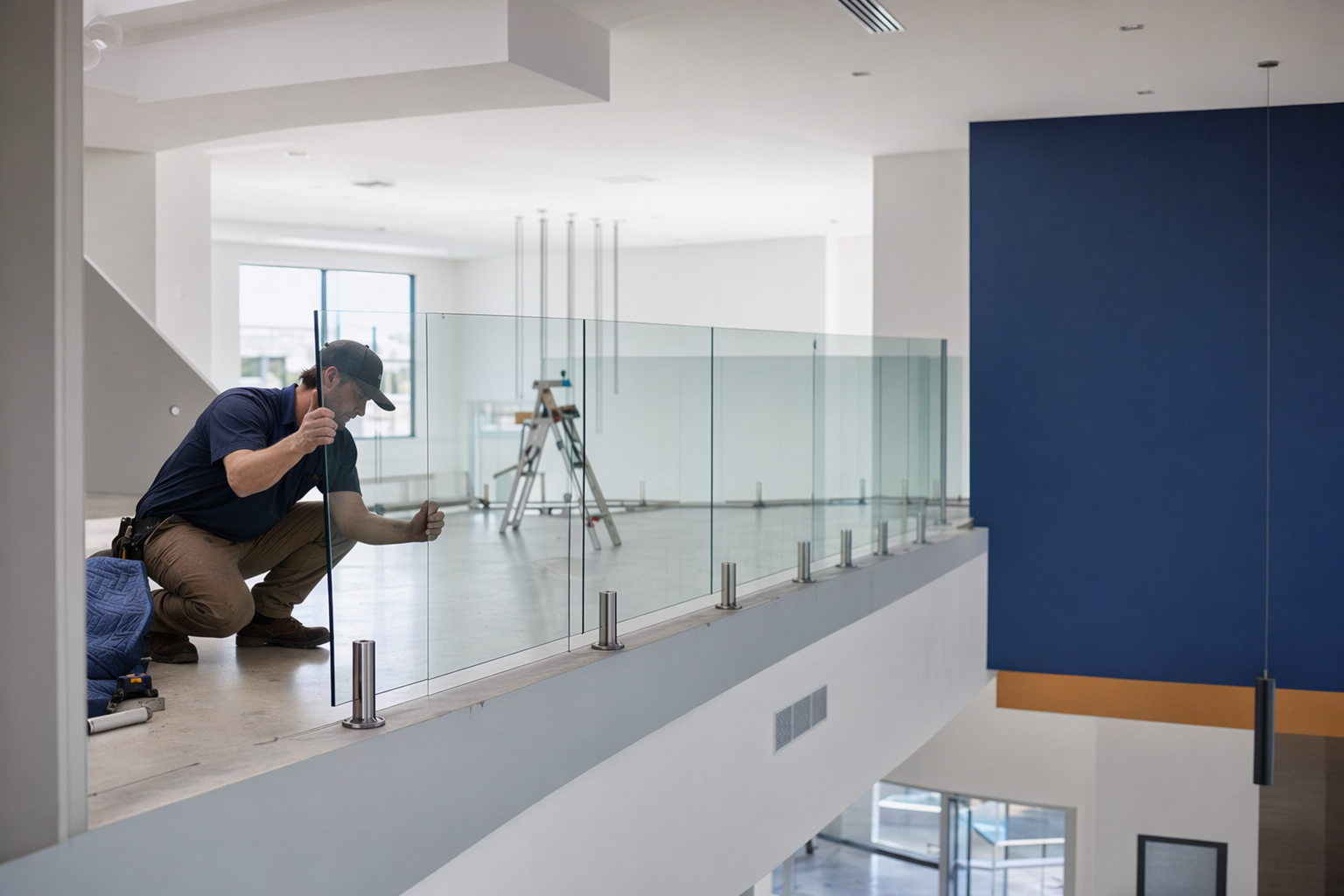
Why glass railings and guardrails need code-ready glazing
In commercial buildings, glass railings and guardrails are designed to prevent falls and protect people in public and work areas. Because the stakes are high, these assemblies are treated as safety systems and must meet local building requirements.
If a glass railing is damaged, loose, or not installed to spec, it can become an urgent safety issue. For new projects and renovations, getting the right materials and proper installation is part of planning—not an afterthought.
Paneworks helps you find a licensed, insured commercial glazing contractor for storefront- and building-envelope style glazing work, including glass railings and partitions. We’re not a glazing contractor and we don’t provide code opinions—but we can help you get the right professionals involved early: get matched.

Common “safety glass” types you’ll hear about
Commercial glass railings are often built using tempered glass and/or laminated glass. Tempered glass is heat-treated so that when it breaks, it typically breaks into smaller pieces. Laminated glass has a plastic interlayer that helps hold fragments together.
For many railing and guard applications, laminated glass is chosen because it can better help limit falling fragments if the glass is impacted. Many projects also use insulated glass (IGUs) for energy performance—but IGUs for railings are specialized and not always appropriate depending on the design and code requirements.
Ask your glazing contractor to describe the glass type and safety behavior for your specific railing design. If you’re reviewing submittals, look for clear statements about safety performance, thickness, and whether the assembly is designed as a system (glass plus framing, posts, hardware, and supports).
Key concept: it’s the whole assembly, not just the glass
A glass railing/guardrail system includes more than the glass panel. It also includes aluminum or stainless framing (if present), posts, clamps, gaskets, anchors, base plates, and any structural connections to the building.
Even if the glass is safety-rated, the system can still fail if the supporting structure, anchorage, or hardware doesn’t meet the requirements. That’s why contractors typically treat railings as scoped, engineered work with design documentation and inspection.
For new builds and remodels, your contractor will usually align the railing assembly to the project documents and the required performance criteria. A good starting point is to share your drawings/specs and confirm whether you need code-compliant engineering support, shop drawings, and installation method statements.
Spacing, height, and load: what to plan for (at a high level)
Commercial guardrail and railing requirements commonly cover things like minimum height, maximum opening sizes (to reduce the chance of a person slipping through), and the ability to resist specified loads. These requirements can vary by building type, occupancy, and local amendments.
Because the exact thresholds depend on your jurisdiction and design, it’s best to confirm the applicable requirements through your project team (often the architect/engineer of record) and with your glazing contractor during submittal review.
When you meet with a contractor, ask practical questions such as: What system are you proposing (glass type and thickness, plus framing/hardware)? Will you provide shop drawings and product data? How will the assembly be tested or verified per the project requirements?
Thermal and performance details (that still matter for safety systems)
In addition to safety, commercial projects often consider how the railing affects durability and building performance. For example, thermal breaks may be used in framing systems to reduce heat transfer when metal components connect to the building.
Glass may also be discussed in terms of coatings and insulating performance (like low-E coatings or IGU performance). These terms are more common for windows and facades, but they can come up on exterior-facing glazing elements near railings as well.
Your contractor can explain which performance attributes apply to your railing location and climate, and how water management, sealants, and joint details affect long-term durability. If you’re coordinating with other trades, this is a good time to clarify who owns flashing/sealant scopes and where transitions happen.
Getting your railing project scoped and bid correctly
Glass railing work is typically scoped and scheduled like other critical building components. A clear scope helps avoid change orders later—especially when glass thickness, infill framing, hardware finishes, anchorage conditions, and engineering requirements are involved.
When you request bids, provide the basics your bidders need: project address/ZIP, how many floors or stories, approximate linear footage of railing/guard, photos of existing conditions (if replacing), and the drawings/specs you’re following. If you don’t have a complete set, a contractor can often help identify what’s missing for accurate quoting—within the limits of their process.
To estimate cost planning ranges by category, you can review typical factors here: costs. For how the process works, including matching you to a licensed, insured commercial glazing contractor, start with get matched.

Glass railings and guardrails in commercial buildings must be engineered and installed as safety systems, so we help you find a licensed glazing contractor to scope and match the right compliant assembly for your project.
Common questions
Is glass railing the same as an interior partition, from a code and glazing standpoint?
No. Glass railings and guardrails are fall-protection systems with their own safety performance expectations. Glass partitions may be safety-related too, but the required performance criteria and design details are not the same as guardrails.
Do I need laminated glass for commercial guardrails?
Many projects do, but the best answer depends on your design, jurisdiction, and the engineered system approach. Your glazing contractor can explain the proposed glazing type and how it aligns with the project requirements and drawings.
Will tempered glass alone be acceptable?
Sometimes, depending on the application and local requirements, but it depends on the full assembly and the project documents. The safest way to confirm is to review the specifications and ask the contractor to provide submittal information for the full railing system.
How do I make sure my bid includes everything for a compliant railing?
Ask what the scope includes: glass type and thickness, framing/hardware, anchorage/connection details, shop drawings/submittals, delivery, installation method, and any required engineering support. For performance and safety systems, omissions in hardware, anchorage, or documentation are common reasons for delays.
What should I share to get matched with the right commercial glazing contractor?
Share your business/project name, phone, ZIP, what you’re building or updating (glass railing/guardrail), approximate linear footage and stories, and any drawings/specs you have. You can also include a preferred contact language if needed.